

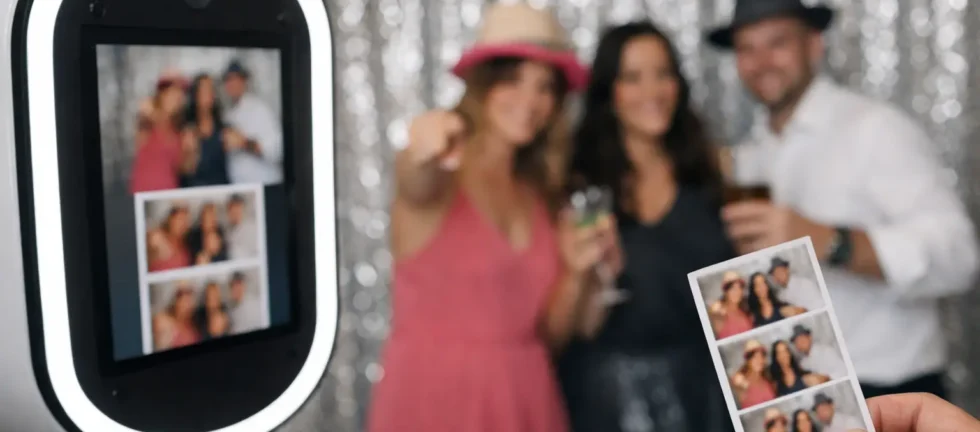
A photo booth image can look perfectly fine on a small screen, then reveal soft faces, smeared hands, and dull prints once guests take it home. If you are wondering why photo booth images are blurry, the answer is rarely that guests simply “moved too much.” More often, it is a combination of lighting, camera capability, focus, setup, and the operator behind the booth.
For a wedding, gala, or corporate celebration, that distinction matters. Guests are giving you a few lively minutes of their time, often dressed at their best and surrounded by people they care about. Their photos should look polished enough to keep, print, and share – not like a rushed snapshot from a dim room.
Why photo booth images are blurry in the first place
Blur is not one single problem. It describes several different issues that can produce a similarly disappointing result. Identifying the type of blur helps explain whether it was caused by the environment, the equipment, or a preventable setup decision.
Motion blur happens when light is limited
Motion blur occurs when a camera needs a longer shutter speed to collect enough light. If a guest laughs, turns toward a friend, raises a champagne glass, or adjusts a prop during that fraction of a second, their movement can appear as a soft streak or ghosted edge.
This is especially common with low-light event venues and booths that rely on small continuous lights, ring lights, or tablet cameras. Those systems may brighten a screen enough to look usable, but they do not always provide enough controlled light to freeze real movement.
A professional strobe changes the equation. It delivers a brief, powerful burst of light that can stop motion far more effectively than a weak continuous source. Properly placed three-point lighting also reduces harsh shadows and keeps faces evenly illuminated, even when several guests squeeze into the frame.
Out-of-focus images are a different issue
A blurry photo is not always caused by movement. Sometimes the camera has focused on the backdrop, a prop in the foreground, or one person while another stands slightly closer to the lens. This is an autofocus problem, and it becomes more noticeable with large groups, reflective glasses, hats, or busy backdrops.
Camera quality and lens quality matter here. A professional camera paired with a sharp lens can focus quickly and accurately in challenging event light. Just as important, the booth should be configured for the distance where guests are actually standing. A technically capable camera can still miss focus when it is poorly positioned or left on unsuitable settings.
Digital noise can make images look soft
When a camera struggles in darkness, it may increase its ISO setting to make the image brighter. Higher ISO can introduce grain, color speckles, and a loss of fine detail. The result may not look obviously blurred at first glance, but skin texture, eyelashes, clothing details, and print edges can appear muddy.
Small sensors found in tablets and basic webcams are particularly vulnerable to this issue. They can work adequately in favorable light, but a ballroom with dimmed overhead fixtures is not a favorable environment. The better approach is to provide sufficient light at the booth so the camera does not have to compensate with settings that reduce image quality.
The photo booth setup matters as much as the camera
A premium camera alone does not guarantee sharp photos. Event photography is a system: camera, lens, lighting, backdrop placement, booth position, software settings, and live operation all need to work together.
A booth set too close to a wall can create unflattering shadows. A glossy backdrop can reflect lighting into the lens and reduce contrast. A dark corner may look convenient on a floor plan but force the equipment to work harder than it should. Even a busy path beside the booth can cause distractions, accidental bumps, and inconsistent guest positioning.
Experienced operators assess the available space before service begins. They look for a location with enough room for a natural guest line, a consistent shooting distance, and lighting that does not compete with colored DJ effects or direct sunlight. That preparation is not glamorous, but it is one of the reasons polished photo booth galleries look consistently good from the first hour to the last.
Lighting needs to be shaped, not just added
More light is not automatically better. A bare light pointed directly at guests can create shiny foreheads, deep shadows under the eyes, and an overexposed center with darker edges. The goal is soft, balanced illumination that flatters a range of skin tones and keeps the entire group visible.
Three-point lighting is valuable because it creates dimension while maintaining clarity. A key light illuminates the main subject, a fill light softens shadows, and a third light can separate guests from the backdrop. The exact arrangement depends on the booth style, backdrop, venue, and group size, but the principle remains the same: intentional lighting produces sharper, more flattering results.
Why tablet-based booths often struggle in dim venues
Tablet photo booths have their place. They are compact, fast to deploy, and may suit a casual daytime gathering with modest expectations. The trade-off is that a tablet camera has a small sensor, limited lens control, and less ability to handle dark or mixed lighting without compromising detail.
At an evening reception or formal corporate event, those limitations become visible. A tablet may slow its shutter speed, aggressively smooth faces, add noise reduction, or use a digital zoom effect that removes detail. The image can look acceptable on the tablet’s display yet feel noticeably soft once printed or viewed full size.
A booth built around a professional camera system offers more control. With a camera such as a Nikon Z9, professional lenses, and dedicated strobes, the operator can create crisp files with accurate color and enough detail for quality prints. This is not about equipment for its own sake. It is about giving guests a keepsake that reflects the level of care invested in the event.
How to prevent blurry photo booth photos at your event
The best prevention begins before the event date. When comparing photo booth options, ask what camera takes the photos, how the booth is lit, and whether an attendant will be present to monitor image quality. A provider should be able to answer directly, without vague claims about “HD” images.
Ask to see full-size examples, not only social media posts or tiny gallery previews. Look closely at faces, group shots, darker venues, and printed samples. Sharp images should retain detail across the frame, not only in the center. Colors should look natural, and the lighting should flatter guests rather than flatten them.
It is also worth discussing the venue conditions. Tell your provider if the room will be dark, if a DJ will use strong colored lighting, if the booth is planned near windows, or if the event has a very large guest count. These details allow the setup to be planned around real conditions rather than assumptions.
During the event, an attended booth provides another layer of protection. An attentive operator can notice if guests are standing outside the focus area, if a light has been shifted, or if a backdrop needs adjusting. They can guide larger groups into position without making the experience feel staged or slow.
Sharp images are part of the guest experience
Guests do not measure shutter speeds or discuss sensor sizes while they are celebrating. They simply notice whether their photos make them look good. Clear, well-lit images encourage people to print extras, share digital copies, and return to the booth with more friends.
That is why image quality should not be treated as an optional upgrade. It shapes the memory your guests take home and the impression your event leaves behind. Zattu Photo Booth uses studio-grade camera equipment and professional three-point strobe lighting because a celebration deserves more than a dim, blurry souvenir.
When you choose a photo booth, look beyond the screen, the props, and the price. Choose a setup designed to capture the energy of the room clearly, even after the dancing starts and the lights go down.