


Event venues are defined as dedicated spaces that host organised gatherings, ranging from intimate private dinners to large-scale conventions. The types of events venues host span weddings, corporate conferences, birthday parties, galas, and community festivals, each demanding a different set of features. Choosing the wrong venue type is one of the most common and costly mistakes planners make. Understanding the main event space categories before you book saves time, money, and a great deal of stress.
What are the main types of events venues host indoors?
Indoor venues give planners control over temperature, lighting, and sound. That control is the single biggest advantage they offer over outdoor spaces, and it explains why the majority of formal events default to an indoor setting.
Hotels and conference centres are the most flexible indoor option. Large conference centres offer spaces exceeding 250,000 sq ft, with suites that accommodate up to 1,800 guests for receptions. That scale suits everything from national trade shows to multi-day corporate retreats. The added benefit of on-site accommodation means out-of-town guests stay connected to the event programme.
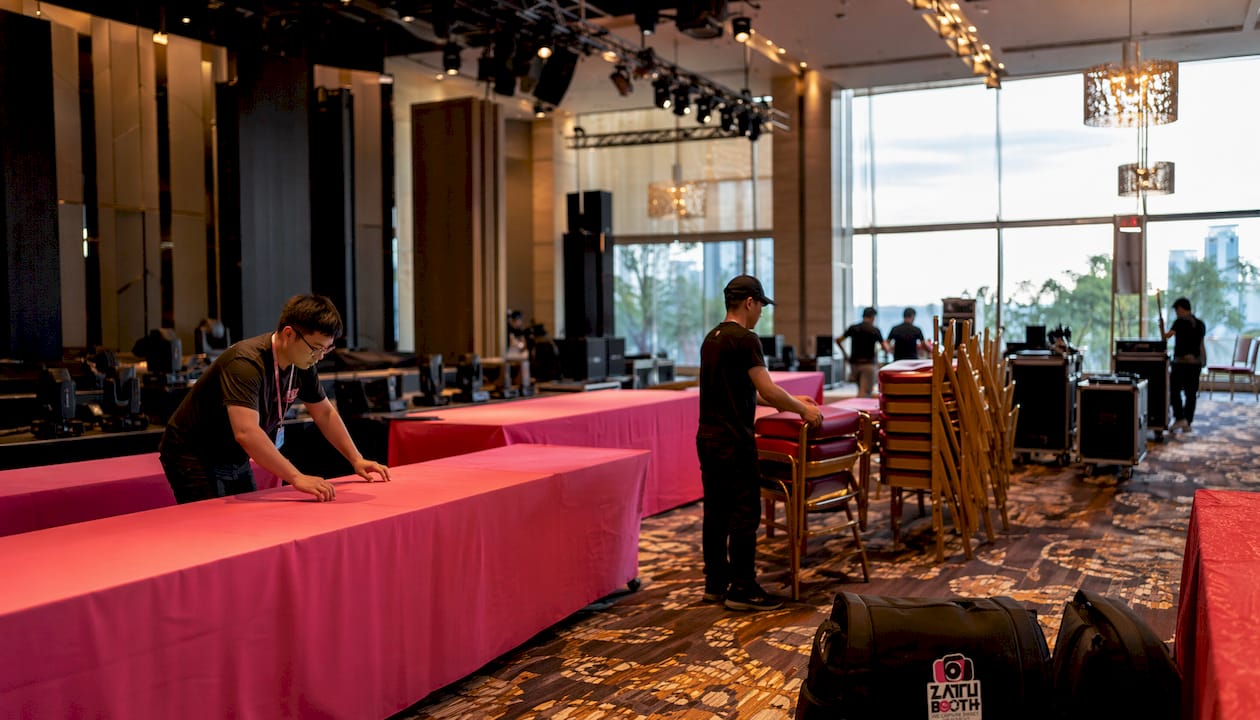
Banquet halls and ballrooms are purpose-built for formal occasions. Ballrooms feature high ceilings and flexible table layouts that work equally well for wedding receptions, gala dinners, and award ceremonies. The open floor plan allows planners to configure staging, dance floors, and dining areas without structural compromise.
Restaurants and private dining rooms suit smaller gatherings. Private dining venues provide built-in catering and a comfortable, intimate atmosphere ideal for business dinners, milestone birthdays, and family celebrations. The catering is already in place, which removes one major logistical variable.
Theatres and performance venues serve a specific but important niche. These spaces work best for product launches, award shows, lectures, and any event where a defined audience faces a defined stage. Fixed seating and professional audiovisual infrastructure are the main draws.
Pro Tip: Book indoor venues with built-in AV infrastructure first. Adding external audiovisual equipment to a space not designed for it adds cost and setup time.
Key reasons planners choose indoor event spaces:
- Predictable climate control regardless of season
- Built-in audiovisual and lighting systems
- Catering kitchens and service corridors
- Accessibility features like lifts and accessible washrooms
- Security and controlled entry points
What are popular outdoor event venue types?
Outdoor venues trade predictability for atmosphere. The choice between indoor and outdoor hinges on that exact balance: control versus the kind of natural ambiance no interior designer can replicate.
-
Gardens and parks. Manicured gardens and public parks are among the most popular outdoor event locations for weddings and community festivals. Natural scenic backdrops in gardens and parks create relaxed atmospheres that formal venues cannot match. The challenge is exclusivity: public parks require permits and offer no guarantee of privacy.
-
Beaches and waterfronts. Waterfront venues deliver dramatic visual backdrops for ceremonies, brand activations, and cocktail receptions. The reflective light near water photographs exceptionally well, which makes these spaces popular for events where imagery matters. Wind and tidal access are the two factors planners most often underestimate.
-
Rooftop venues. Rooftop spaces have grown into a staple for networking events, product launches, and cocktail receptions in urban centres. The cityscape view creates a natural conversation starter and reduces the need for elaborate décor. Capacity is typically lower than ground-level spaces, so rooftops suit curated guest lists over mass gatherings.
-
Farms, vineyards, and countryside properties. Rustic countryside venues suit team-building retreats, harvest festivals, and relaxed wedding receptions. The informal setting encourages guests to move freely between spaces, which improves social engagement. Parking and transportation logistics require more planning than urban venues.
-
Sports grounds and stadiums. Premium sports venues host far more than games. London’s Kia Oval hosts over 2,000 events annually, from corporate hospitality to private celebrations. The scale and brand recognition of a sports venue adds prestige to an event that a blank-canvas space cannot offer.
Pro Tip: Always confirm a wet-weather alternative before signing an outdoor venue contract. Professional venues provide pre-arranged indoor backup spaces as part of their agreements.
How do specialised and temporary event venues support diverse needs?
Specialised and temporary venues are the fastest-growing event space category, and the reason is straightforward: they offer customisation that permanent venues cannot.
Converted warehouses and multipurpose spaces are a defining trend in 2026. These venues use modular configurations to shift between a seated dinner for 200 and a standing reception for 500 within the same footprint. They also reduce the need for external suppliers because many include built-in staging, rigging points, and kitchen facilities.
Temporary structures, including tents, clear-span domes, and pop-up pavilions, solve a specific problem: they create venue capacity where none exists. A vineyard with no permanent event building can host a 300-person gala under a clear-span tent without constructing anything permanent. The trade-off is planning time. Temporary event structures require permits and detailed structural assessments to confirm suitability for the event size and local weather conditions.
| Feature | Permanent venue | Temporary structure |
|---|---|---|
| Weather protection | Built-in | Depends on structure type |
| Permit requirements | Existing approvals | New permits per event |
| Customisation | Limited by fixed layout | High, blank-canvas flexibility |
| Setup time | Minimal | Significant lead time required |
| Cost model | Hire fee | Hire fee plus build cost |
Pro Tip: Use temporary venues to expand capacity at a location you already love. A garden ceremony with a permanent indoor reception space nearby gives you the best of both venue types.
What factors influence choosing venues for different events?
The right venue type is the one that matches your event’s purpose, not just its guest count. These are the factors that separate a good venue decision from a costly one.
Capacity and layout flexibility come first. Scalable venues like Grande Lakes Orlando offer over 169,000 sq ft with 56 breakout rooms, demonstrating how a single property can serve a 10-person board meeting and a 1,600-person convention. Planners should confirm both minimum and maximum capacities before shortlisting.
Event purpose and ambiance shape the shortlist significantly. A formal awards gala requires high ceilings, a stage, and a neutral colour palette. A birthday party benefits from a more relaxed, personalised space. Matching the venue’s existing aesthetic to your event theme reduces décor costs and setup time.
Technical facilities are non-negotiable for corporate and entertainment events. AV systems, staging, rigging points, and reliable Wi-Fi are baseline requirements. Venues that lack these force planners to hire external suppliers, which adds cost and coordination complexity.
Contract terms, including attrition clauses, deserve careful review. Attrition clauses penalise planners for unused minimum guarantees, and they apply even when cancellations occur 30–90 days before the event. Reading these terms before signing protects your budget from unexpected charges.
| Event type | Recommended venue category | Key requirement |
|---|---|---|
| Wedding | Ballroom, garden, vineyard | Ceremony and reception space |
| Corporate conference | Hotel, conference centre | AV infrastructure, breakout rooms |
| Birthday party | Restaurant, banquet hall, rooftop | Flexible layout, catering |
| Community festival | Park, farm, sports ground | Open space, permits, parking |
| Gala dinner | Ballroom, converted warehouse | Stage, formal dining layout |
- Confirm advanced booking timelines for peak-season dates, especially at premium venues
- Ask for a full list of included amenities versus add-on costs
- Verify accessibility for guests with mobility needs
- Request references from planners who have hosted similar events at the venue
Key takeaways
Matching venue type to event purpose is the single most important decision in event planning, and it requires evaluating capacity, ambiance, technical facilities, and contract terms together.
| Point | Details |
|---|---|
| Indoor venues offer control | Hotels, ballrooms, and theatres give planners reliable climate, AV, and layout options. |
| Outdoor venues need backup plans | Always confirm a wet-weather alternative before signing any outdoor venue contract. |
| Temporary structures need permits | Pop-up tents and domes require structural assessments and local permits per event. |
| Attrition clauses carry real cost | Unused minimum guarantees can trigger penalties up to 90 days before your event date. |
| Venue type shapes guest experience | The space itself sets the tone, so match the venue’s aesthetic to your event’s purpose first. |
What I’ve learned from watching planners choose the wrong venue
George ZATTU
The most common mistake I see is planners falling in love with a venue’s photos before confirming its logistics. A stunning vineyard with no indoor backup is a liability, not an asset, the moment a storm rolls in. I’ve watched beautifully planned outdoor receptions scramble for cover because the contract had no wet-weather clause.
The second mistake is treating venue selection as separate from entertainment and photography decisions. The venue’s layout directly affects where a photo booth can be placed, how guests flow through the space, and whether the lighting supports quality images. At ZATTU PHOTO BOOTH, we’ve set up in ballrooms, converted warehouses, rooftop terraces, and garden marquees. Each space requires a different approach to placement and lighting to get frame-worthy results.
My honest advice: book your venue and your entertainment in the same planning window. Venues that confirm early fill their peak dates fast, and the photo booth trends for 2026 show that interactive entertainment is now an expected feature, not an optional add-on. Planners who treat it as an afterthought end up with suboptimal placement and disappointed guests.
Finally, read every contract line. Attrition clauses, noise curfews, and vendor restrictions are the three terms most often overlooked. Any one of them can significantly change your event’s cost or format.
— George ZATTU
How ZATTU PHOTO BOOTH fits any venue you choose
No matter which venue type you select, ZATTU PHOTO BOOTH brings studio-quality photo experiences directly to your space.
Our mobile setups work in ballrooms, garden marquees, rooftop terraces, and converted warehouses across Southwestern Ontario. We use Nikon full-frame mirrorless cameras and professional lighting, so the images look sharp regardless of the venue’s existing light conditions. Whether you’re planning a wedding photo experience or a corporate event activation, we adapt our booth setup to the space. Our selfie photo booth rental is one of our most popular options for events of all sizes. Request a quote and we’ll confirm availability for your venue and date.
FAQ
What types of events do venues typically host?
Venues host weddings, corporate conferences, birthday parties, galas, community festivals, and product launches. The specific event types a venue suits depend on its capacity, layout, technical facilities, and licensing.
What is the difference between a banquet hall and a ballroom?
Both suit formal events, but ballrooms feature high ceilings and larger floor areas designed for dancing and stage arrangements, while banquet halls prioritise dining layouts and are often more compact.
Do outdoor venues require special permits?
Most outdoor venues, particularly parks and temporary structures, require municipal permits. Temporary event structures also need structural assessments to confirm safety for the planned guest count and weather conditions.
What is an attrition clause in a venue contract?
An attrition clause requires planners to pay for a minimum number of guests or a minimum spend, even if attendance falls short. These clauses apply even when cancellations happen 30–90 days before the event.
How early should I book a venue?
Premium venues fill peak dates quickly, so booking 9–12 months in advance is standard for weddings and large corporate events. Smaller or mid-week events may secure a venue with 3–6 months’ notice.