

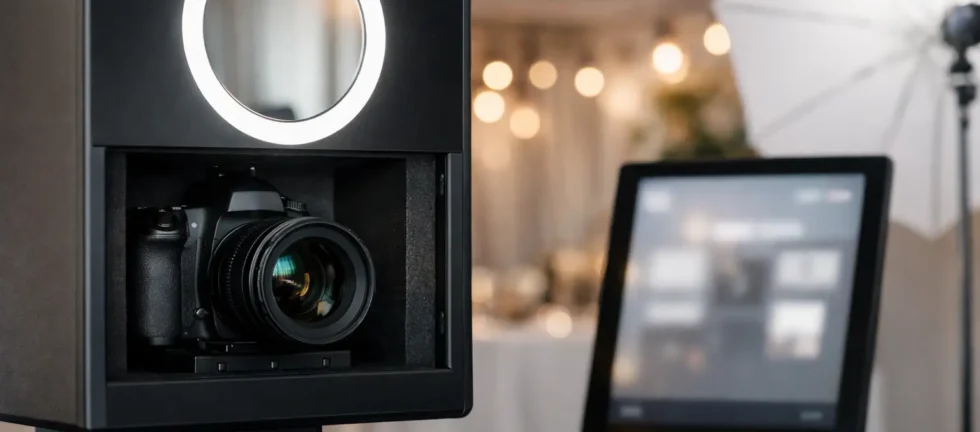
A blurry print with harsh shadows can make even a beautiful event feel cheap. That is why the professional photo booth camera behind the setup matters far more than most hosts realize. If you are planning a wedding, gala, holiday party, or brand event, the camera is not just a spec on a quote – it shapes how guests look, how fast the booth runs, and whether the final photos feel worth keeping.
Why the camera changes the whole experience
People usually notice the props, the backdrop, or the booth design first. What they remember later is the photo itself. If skin tones look off, details are muddy, or motion blur shows up in every second frame, the booth stops feeling premium no matter how polished the exterior looked at the event.
A true professional photo booth camera gives you more than higher resolution. It improves focus speed, low-light performance, color accuracy, and consistency from one group to the next. That consistency is what makes a booth feel dependable at a busy reception or corporate event where guests step in quickly and expect great results every time.
This is also where many low-cost setups fall short. Tablet-based booths can be fun for casual use, but they are limited by tiny sensors, weaker optics, and less control over exposure. They may be fine for a quick snapshot. They are rarely the right choice when you want flattering portraits, sharp prints, and a booth experience that matches the standard of the rest of your event.
What makes a professional photo booth camera different
The biggest difference starts with sensor size. Professional cameras use much larger sensors than tablets or phones, which helps capture more detail and handle challenging lighting with less noise. That matters in ballrooms, wedding venues, and event spaces where ambient light can shift from warm and dim to bright and mixed.
Lens quality matters just as much. A professional camera paired with a strong lens creates cleaner detail, better contrast, and more flattering separation between guests and the background. It also avoids the stretched, distorted look that can happen with cheaper wide-angle setups. When groups of friends squeeze into a frame, you want everyone to look good, not like they were photographed through a peephole.
Speed is another factor hosts rarely think about until the booth line gets long. Professional cameras focus faster, fire more reliably, and recover quickly between shots. At a high-energy event, that translates to shorter waits, fewer retakes, and a smoother flow for guests.
Then there is control. A professional operator can dial in shutter speed, aperture, ISO, white balance, and flash output for the room rather than hoping auto mode gets it right. That control is one of the clearest differences between a polished booth experience and a booth that feels unpredictable all night.
Lighting matters as much as the camera
Even the best camera cannot fix bad lighting. If you are evaluating a photo booth service, ask about the full image setup, not just the camera body. A premium booth should pair a professional photo booth camera with proper lighting designed for portraits.
Three-point strobe lighting is a strong example because it creates shape, flattering skin tone, and consistent exposure. It helps reduce unflattering shadows under the eyes, prevents washed-out highlights, and gives prints a crisp studio look. That is very different from relying on a single ring light or the built-in light from a tablet enclosure.
There is a practical reason this matters beyond aesthetics. Consistent lighting makes the booth more reliable across different guests, heights, outfits, and skin tones. It reduces the risk of one group looking excellent and the next looking flat or overexposed. For weddings and formal events, that consistency is a big part of what guests perceive as quality.
The best camera depends on the event
There is no one-size-fits-all answer, even at the high end. The right professional photo booth camera depends on guest count, venue lighting, print expectations, and how the booth is being used.
At a wedding, you usually want a setup that prioritizes flattering portraits, clean skin tones, and sharp prints that guests will actually keep. At a corporate activation, speed and consistency may matter even more, especially if the booth is producing branded prints for a large volume of attendees. At a gala, the booth may need to handle formalwear, dark backgrounds, and fast-moving groups without losing image quality.
That is why camera choice should not be treated like a marketing gimmick. A flagship mirrorless camera can be a major advantage, but only when paired with the right lens, lighting, software, and operator experience. Expensive gear alone does not guarantee a premium result. The system has to be built correctly.
What to ask before you book
If image quality matters to you, ask direct questions. What camera is being used? Is it a professional interchangeable-lens camera or a tablet-based setup? What kind of lighting is included? Are prints produced on-site, and if so, how does the team ensure the digital file is calibrated for print quality?
You should also ask who is operating the booth. A strong camera in inexperienced hands can still produce disappointing photos. An owner-operated or closely managed service often offers more accountability because the people handling the setup understand both the technical side and the event-day pressure. That translates to fewer surprises, faster troubleshooting, and a smoother guest experience.
It is also worth asking to see real sample galleries from actual events, not just a handful of styled marketing shots. Look at skin tones, sharpness, consistency, and how well the booth handled different group sizes. If every image looks different, that tells you something. If the photos feel polished across multiple venues and lighting conditions, that tells you even more.
Why premium image quality pays off
Hosts sometimes hesitate when they compare premium booth pricing with budget options. That is understandable. But the value of a better camera setup shows up in ways that last longer than the event itself.
First, guests are more likely to keep and share photos that look genuinely good. That matters at weddings where prints become keepsakes, and at corporate events where branded photos extend the reach of the experience. A sharp, flattering image has a longer life than a novelty print guests leave on the table.
Second, quality reduces friction. Better autofocus, better lighting, and better print calibration mean fewer retakes and fewer disappointed guests. That creates a booth line that moves well and a vendor experience that feels organized rather than reactive.
Third, premium photos reflect on the event as a whole. When the booth output matches the effort put into the venue, decor, attire, and planning, it feels intentional. When the booth looks like an afterthought, people notice that too.
For clients who want a refined event experience, this is where premium service earns its place. A setup built around studio-grade equipment, including a camera like the Nikon Z9, professional lenses, and controlled strobe lighting, produces a different category of result than a low-cost kiosk designed for convenience first.
The camera is part of the promise
A photo booth should do more than entertain people for a few minutes. It should give them a photo they are happy to keep, post, and remember. That starts with choosing a service that treats image quality as essential, not optional.
When you are comparing vendors, look past the shell of the booth and the prop table. Ask what is creating the image. The right professional photo booth camera, backed by proper lighting and experienced operation, is one of the clearest signs that you are booking a service built for real event standards.
If the photos matter, the camera matters. And when the camera, lighting, and execution are all working together, the booth stops being just another add-on and becomes one of the most memorable parts of the celebration.
The best event details are the ones guests feel without needing them explained. Great photo quality is one of them.