

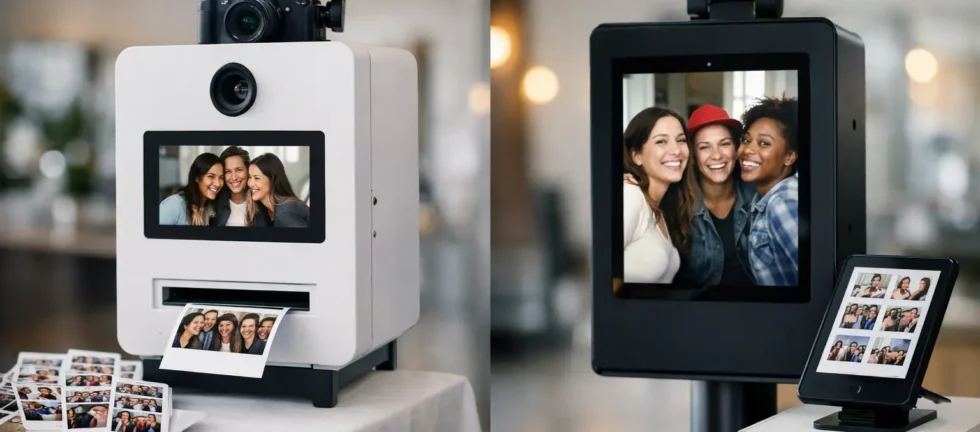
A packed dance floor gets the energy going, but the photo booth is often where guests slow down, gather, and make the moments they actually take home. That is why the choice between a print booth versus digital booth matters more than most hosts expect. It affects how guests interact, what they remember, how your event looks in photos, and whether the booth feels like a premium feature or just another screen.
For some events, a digital-only setup is exactly right. For others, instant prints are the part guests talk about long after the night ends. The better choice depends on what kind of experience you want to create, how important keepsakes are, and how much presentation matters for the occasion.
Print booth versus digital booth: what is the real difference?
At the most basic level, a print booth gives guests a physical photo strip or print on the spot, while a digital booth sends images by text, email, QR code, or AirDrop-style sharing. Both can capture the same moment, but they do not deliver the same experience.
A print booth creates a pause. Guests pose, review the image, wait a few seconds, and leave with something tangible in their hands. That physical takeaway changes the emotional value of the interaction. People pin prints to the fridge, tuck them into wallets, and save them in memory boxes after weddings, galas, and milestone parties.
A digital booth is faster and more flexible when the goal is instant sharing. Guests can post their photos right away, save them to their phones, and move on. At brand activations and modern corporate events, that speed can be useful, especially when social reach matters more than physical keepsakes.
Why print booths usually feel more premium
For weddings, upscale private events, and polished corporate functions, print booths often feel more substantial because they are. A well-produced print signals care, quality, and intention. It tells guests this was not added as an afterthought.
That premium feel is not just about paper. It comes from the full setup behind the scenes – camera quality, lighting, print design, booth styling, and on-site operation. A professional booth using a high-end camera and studio lighting produces flattering images with better skin tones, sharper details, and a more refined final result than simplified tablet-based systems.
This is where many hosts get tripped up. They compare a print booth and digital booth as if the only difference is whether photos come out on paper. In reality, the booth technology and operator standards often vary just as much as the output. A print booth from a premium provider is usually built around image quality and guest experience from start to finish.
When a digital booth makes sense
A digital booth is not the lesser option by default. It is simply better suited to certain priorities.
If your event has a younger, social-first crowd, digital delivery can be a strong fit. Guests do not have to keep track of a paper print, and they can share photos immediately. For product launches, networking mixers, conferences, and some corporate events, that convenience can align well with the pace of the event.
Digital booths also work well when space is tight or when the host wants a very minimal footprint. Some events do not need a full print station. If the goal is light interaction with quick throughput, digital can keep the line moving.
There is also a branding advantage in the right setting. Digital overlays, branded frames, and instant sharing can support marketing goals, especially if attendee contact capture or online engagement is part of the event strategy.
That said, digital-only experiences can feel forgettable if they are not executed well. Most guests already have thousands of photos on their phones. If the booth image quality is average and there is no physical takeaway, those photos can disappear into the camera roll within hours.
Guest behavior changes with print
One of the most overlooked parts of the print booth versus digital booth decision is how guests behave around each setup.
With print booths, people are more likely to treat the photo as a keepsake. They gather in groups, coordinate poses, and often come back more than once. The printed photo becomes part of the event itself. At weddings, guests often slip a copy into a guestbook or keep it at their table for the rest of the evening. At holiday parties and galas, prints become conversation starters.
Digital booths tend to create quicker interactions. Guests step in, snap the image, send it to themselves, and move on. That can be a plus when you want volume and speed. But if your goal is to create a memorable station that draws people in and holds their attention, prints often win.
This matters for event flow. A booth is not just a camera. It is an entertainment feature, a social touchpoint, and a branded or personalized part of the room. The more tangible the result, the more staying power it tends to have.
Cost versus value
If you are comparing options strictly by price, digital booths often appear more attractive. They usually require less equipment, no media stock, and simpler staffing. On paper, that makes them look efficient.
But event hosts planning weddings, galas, and high-visibility corporate functions are rarely shopping for the cheapest interaction in the room. They are looking for value – something that reflects the quality of the event and delivers consistently under pressure.
That is where print booths often justify the investment. You are not just paying for prints. You are paying for a stronger guest experience, more memorable takeaways, and a higher standard of presentation. If your event budget already includes thoughtful details like florals, signage, catering, and entertainment, a premium print booth tends to fit that standard better than a basic digital-only setup.
The key is to compare full experiences, not line items. A low-cost booth may save money upfront and still disappoint guests with poor lighting, low image quality, or inconsistent operation. That trade-off is rarely worth it on an important event day.
Print booth versus digital booth for weddings
Weddings almost always lean in favor of print, and for good reason. Guests love leaving with a keepsake, couples get a visual record of who celebrated with them, and the booth becomes part of the memory-making rather than just content capture.
Printed strips or cards feel personal. They can match the wedding design, include names and dates, and complement the event aesthetic instead of clashing with it. That level of customization matters when every detail has been chosen carefully.
Digital sharing still has value at weddings, especially as a companion feature. Guests appreciate getting copies on their phones, and couples often want an online gallery afterward. But when it is print versus digital for the core wedding booth experience, print usually creates the richer result.
For corporate events, it depends on the goal
Corporate planners usually have to balance guest experience, branding, and logistics. That means there is no automatic winner.
If the event is internal, such as a holiday party, awards night, or employee appreciation event, print booths often perform better because they feel celebratory and generous. People enjoy taking something back to their desk or home, and branded templates can still reinforce the company identity.
If the event is external, such as a trade show, launch party, or promotional activation, digital booths can make more sense when immediate sharing and speed matter most. Even then, image quality should not be treated as optional. A digital photo that looks flat, dim, or poorly lit does not help the brand.
The best setups often combine both. Guests get a polished printed keepsake and a digital copy for easy sharing. That gives you the emotional value of print and the convenience of digital without forcing a compromise.
What to look for before you book
The print booth versus digital booth question is really a quality question in disguise. Ask what camera is being used, what lighting is included, who operates the booth, how customization works, and whether printing or sharing is built into the package clearly. A polished booth experience should feel organized well before event day.
You should also think about your audience. Are they going to cherish a physical photo? Are you hosting an event where presentation matters? Do you want guests to slow down and enjoy the moment, or move through quickly and share online? Those answers will point you in the right direction faster than any feature list.
For hosts who care about reliability, flattering photos, and a booth that feels worthy of the celebration, the strongest choice is often not print or digital alone. It is a professionally run experience that uses excellent equipment, thoughtful design, and the right output for the event.
A great booth should do more than capture faces. It should preserve the feeling in the room, and the best format is the one your guests will still be talking about after the lights come up.