

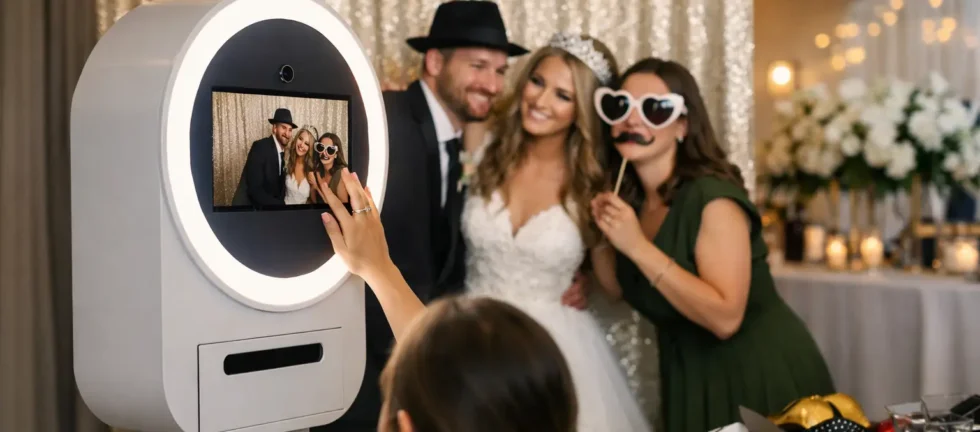
A great photo booth looks effortless from the guest’s side: step in, smile, tap the screen, and walk away with a print worth keeping. Behind that quick moment is a carefully managed system of camera equipment, lighting, software, printing, customization, and attentive on-site service. Understanding how photo booths work helps you choose an experience that feels polished rather than like one more device competing for attention at your event.
For a wedding, gala, corporate party, or milestone celebration, the booth should do more than take pictures. It should flatter guests, fit the room, keep the line moving, and produce keepsakes that still look beautiful after the night is over.
How Photo Booths Work From Setup to Send-Off
A professional photo booth begins long before the first guest arrives. The operator reviews the venue, load-in details, available space, power access, event schedule, and backdrop placement. This preparation matters because a booth positioned too close to a busy entrance, bar line, or dance floor can create congestion instead of engagement.
Once on site, the booth is assembled and tested. A premium setup commonly includes a professional camera, lens, studio-style lighting, touchscreen interface, printer, backdrop, and props. The operator checks exposure, framing, print quality, sharing options, and the custom photo template before guests arrive.
When the event begins, a guest or group steps into the marked photo area and follows simple on-screen prompts. They select a session, pose for a countdown, and the booth captures a series of images. Depending on the event package, those photos may become a single portrait, a multi-image strip, a GIF, a boomerang-style clip, or an AI-enhanced image.
The booth software processes the images almost immediately, applies the event’s custom template or branding, and sends the finished file to the printer and digital gallery. Guests can receive a physical print in seconds and, when digital sharing is enabled, can send the image to themselves by text, email, or QR code.
That is the guest-facing process. The quality of every step, however, depends heavily on the equipment and person running it.
The Camera and Lighting Make the Biggest Difference
Not all photo booths create the same kind of image. Many low-cost booths rely on a tablet camera and small built-in light. They can be fun in the right setting, but they often struggle in dim reception rooms, ballrooms with colored uplighting, and venues with mixed lighting. The result can be soft images, uneven skin tones, harsh shadows, or prints that look darker than expected.
A professional camera-based booth works more like a compact portrait studio. At Zattu Photo Booth, a Nikon Z9 camera, professional lenses, and three-point strobe lighting are used to create bright, detailed, flattering photographs. The camera captures more information than a tablet camera, while controlled lighting helps maintain consistent results whether the venue is naturally bright or nearly dark.
Three-point lighting is especially valuable at formal events. It can illuminate faces evenly, add dimension, and separate guests from the backdrop without producing the flat, overexposed look associated with basic ring-light setups. It also means a group of eight friends can stand together and still look properly lit.
This is one area where the trade-off is clear. A simple digital booth may take up less space and cost less, while a studio-grade booth requires more professional equipment and setup. For hosts who care about print quality, polished social sharing, and photographs guests will frame or save, the added production value is usually worthwhile.
What Happens After the Photos Are Taken?
Once a session is complete, photo booth software handles the fast work behind the scenes. It organizes each image, applies the selected design, and prepares files for printing and sharing. The design can include names, a wedding date, event colors, a monogram, corporate logo, campaign message, or themed graphics that tie the booth to the celebration.
For a wedding, that might mean an elegant print strip that matches the invitation suite. For a company holiday party, it could be a branded layout that gives every guest a take-home reminder of the event. At a gala, the template can be refined enough to feel aligned with a formal program rather than promotional clutter.
Professional dye-sublimation printers are designed for quick, event-ready output. They produce dry, durable prints with consistent color, rather than ink-heavy pages that can smudge. The typical guest experience is immediate: photos are taken, the layout appears on screen, and printed keepsakes are ready moments later.
Digital delivery adds another layer of convenience, especially for corporate events and younger guest lists. Still, digital files should not replace prints automatically. Physical photo strips often become part of the celebration itself. Guests tuck them into purses, display them on the fridge, add them to a guest book, or bring them home as a small reminder of a meaningful night.
Why an Attendant Matters More Than Most Hosts Expect
A booth can be technically capable and still underperform without the right operator. An experienced attendant does more than stand beside the equipment. They welcome guests, explain the process, encourage groups to participate, keep props organized, monitor printer supplies, solve small issues before they become visible, and maintain a steady flow.
That support is particularly important during peak moments. After dinner, during cocktail hour, or when the dance floor is full, a booth can attract a line quickly. A prepared attendant helps guests move through without making anyone feel rushed. They can also adjust the experience for grandparents, young children, large groups, or guests who are unsure how to use the touchscreen.
Owner-operated service offers an added level of accountability. The person who understands the equipment, design details, and event expectations is there to manage the experience personally. For couples and planners, that reduces the risk of last-minute confusion or an unattended booth sitting idle when guests are ready to use it.
Customization Turns a Booth Into Part of the Event
A photo booth should feel intentional, not dropped into the corner as an afterthought. Backdrops, props, prints, and digital overlays all influence whether it complements the event design.
A clean white, black, shimmer, floral, or custom backdrop can shape the visual style of every image. Props can be playful and colorful for birthdays or holiday parties, or more selective and elevated for weddings, brand activations, and galas. The best choice depends on the atmosphere you want. Not every event needs oversized novelty glasses and inflatable instruments; sometimes a beautiful backdrop and professional portraits are the stronger choice.
AI photo booth experiences can add another option for hosts seeking a more interactive activation. Guests can be transformed into themed scenes or creative styles while still receiving a shareable final image. This works well for corporate parties, product launches, and themed celebrations, though it is best positioned as an enhancement rather than a substitute for classic, natural portraits.
An audio guestbook is another meaningful add-on. While the photo booth captures the energy guests show on camera, an audio guestbook preserves voices, stories, advice, and spontaneous messages that couples and hosts can revisit long after the event.
Questions to Ask Before Booking a Photo Booth
The most useful question is not simply, “How many hours do we get?” Ask what kind of images, prints, and event support are included. A lower quote can sometimes mean tablet-quality photography, minimal lighting, limited customization, a self-serve drop-off setup, or unexpected fees for travel, prints, sharing, props, or setup.
Ask whether the booth uses a professional camera and dedicated lighting, whether an attendant stays on site, and whether the price is clearly defined upfront. Request examples of actual event images, not only polished promotional mockups. You should also confirm the footprint required, the venue’s access conditions, and whether the vendor carries backup supplies and equipment.
For Ontario events, local experience matters because venues vary widely in layout, loading rules, lighting, and timing. A reliable booth team arrives prepared, communicates clearly, and adapts without turning venue logistics into the host’s problem.
The best photo booth is not the one with the longest feature list. It is the one that gives your guests a reason to gather, laugh, and leave with photographs that feel as special as the occasion itself. When you are comparing options, look beyond the screen and ask what will be visible in every print: the quality of the light, the care behind the setup, and the people you invited to celebrate with you.