

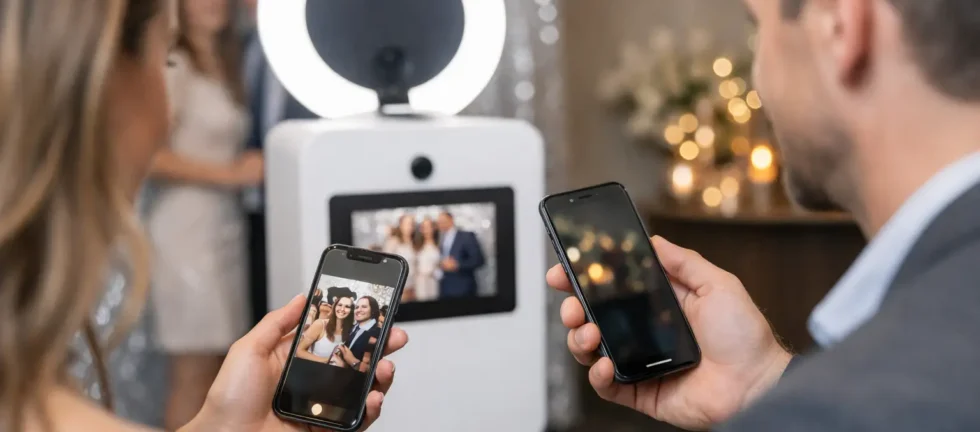
A great photo booth moment moves quickly: a group steps in, the camera flashes, everyone laughs at the preview, and they want the image on their phone before the next group arrives. That is why hosts often ask, “can guests airdrop booth photos?” The short answer is yes, sometimes – but AirDrop is not always the smartest primary sharing method for a busy wedding, gala, or corporate event.
The best approach depends on your guest count, venue connectivity, the booth’s equipment, and how much you want to protect the flow of the experience. A premium photo booth should make sharing feel easy without turning every session into a technical handoff.
Can Guests AirDrop Booth Photos?
Guests can AirDrop booth photos when the booth uses compatible Apple hardware and the operator has enabled a practical, secure workflow. AirDrop transfers files directly between nearby Apple devices, so it does not rely on venue Wi-Fi or cellular service. That can be useful at locations with weak reception, including ballrooms, rural venues, and large event spaces where service is inconsistent.
However, AirDrop only works between Apple devices. Guests using Android phones cannot receive photos that way, and even iPhone users may have AirDrop set to Contacts Only or Receiving Off. Those settings can create delays, especially when a booth is serving a line of guests who are ready for their next cocktail, dance, or conversation.
For a small private party, an operator may be able to AirDrop a few requested files without disrupting the experience. At a 200-person wedding or a high-volume corporate activation, relying on individual AirDrop transfers can create a bottleneck. The question is not simply whether it is possible. It is whether it supports the polished, efficient guest experience you are paying for.
Why AirDrop Can Slow Down a Photo Booth Line
AirDrop looks simple when two people are standing together with their phones ready. At an event, the reality can be different. The booth operator may need to identify the right device from a list of nearby phones, wait for the guest to accept the transfer, confirm that the image arrived, then repeat the process for the next person.
That process also introduces privacy concerns. If multiple devices appear with similar names, an image can be sent to the wrong person. Guests may feel uncomfortable seeing unfamiliar device names pop up on their phones. It is a small detail, but premium events are built on small details being handled thoughtfully.
There is also a quality consideration. If the booth creates professional, high-resolution images, the file size may be larger than a casual phone snapshot. A direct transfer can still work well, but it may take longer than guests expect when several images, GIFs, or branded digital files are involved.
A professional photo booth experience should keep the energy moving. Guests should not have to adjust settings, spell out their device name, or wait while an operator troubleshoots a phone connection. The booth should feel like part of the celebration, not another task on the event checklist.
Better Ways to Share Booth Photos With Guests
For most events, the strongest sharing plan combines instant keepsakes with simple digital access. This gives guests something tangible in the moment while ensuring they can revisit and download their images after the celebration.
Instant prints create the immediate payoff
A professionally printed photo is still one of the most memorable parts of the booth experience. Guests leave with a keepsake in hand, often customized with the couple’s names, a gala theme, company branding, or the event date. It requires no app, no password, and no phone settings.
Prints also solve a problem that digital delivery cannot always solve: they stay visible. A photo on a refrigerator, office desk, or scrapbook becomes a lasting reminder of the event rather than another image buried in a camera roll.
Digital sharing offers convenience without the crowding
Digital delivery can give guests easy access to their booth photos without requiring every person to stand at the booth for a transfer. Depending on the package and event setup, photos may be delivered through a post-event online gallery or other digital-sharing option.
This approach works especially well for weddings, where guests may be busy participating in speeches, dinner, and dancing. They can enjoy the booth in the moment, take home a print, and save digital copies later when they have time. For corporate events, it also gives organizers a more organized way to preserve branded event images.
A hybrid plan serves the widest range of guests
Not every guest uses an iPhone. Not every guest wants to scan a code, type an email address, or receive a text message while they are dressed up and enjoying the evening. Providing both physical prints and digital access is the most inclusive approach.
If AirDrop is available as an occasional courtesy, it can be helpful for guests who specifically request it. It should not be the only way photos are shared, and it should never come at the cost of a growing line or distracted attendant.
What to Ask Before Booking a Photo Booth
Photo sharing is worth discussing before the event, not five minutes after guests start arriving. A dependable provider should explain what is included, how guests receive their images, whether prints are included, and what happens if the venue has poor Wi-Fi or cell service.
Ask whether the booth uses a professional camera and lighting setup or a tablet-based system. This matters because guests notice the difference in skin tones, sharpness, exposure, and consistency, particularly in dim reception rooms. A Nikon Z9 camera, professional lenses, and three-point strobe lighting are designed to produce images that look polished in a way a basic front-facing tablet camera cannot replicate.
You should also ask who will be operating the booth. A trained on-site attendant can keep sessions moving, help guests feel comfortable, restock prints, manage props, and resolve small issues before they become visible to your guests. Owner-operated service adds another layer of accountability for events where timing and presentation matter.
Finally, clarify the full package cost. Digital access, print quantities, custom templates, travel, setup time, and add-ons should be explained upfront. Transparent pricing is not just a budgeting advantage. It is a sign that your photo booth vendor has planned the service carefully.
When AirDrop Makes Sense
AirDrop can be a useful addition for the right event. It is particularly practical for a smaller Apple-heavy gathering, a private celebration where guests know one another, or a situation where a host needs a few select high-quality files delivered immediately.
It can also be helpful when venue internet is unavailable and a guest needs a photo quickly for personal sharing. Even then, a clear process matters. The operator should confirm the device, send only the intended files, and keep the transfer brief so the next group is not waiting.
For large weddings, holiday parties, fundraisers, and brand events, a more scalable digital delivery option will usually be the better choice. The goal is not to force every guest into the same technology. It is to make sure every guest leaves with a great photo and an easy path to enjoy it.
The Experience Matters More Than the Transfer Method
Guests rarely remember exactly how a digital image reached their phone. They remember how they looked, how much fun they had with the people beside them, and whether the photo felt worth keeping. That is where professional equipment, flattering lighting, thoughtful backdrops, custom print design, and attentive service make the difference.
At Zattu Photo Booth, the focus is on making the sharing process feel secondary to the celebration itself. Whether your guests want a printed keepsake, digital access after the event, or an occasional direct transfer, the booth experience should remain warm, efficient, and beautifully presented.
Choose a sharing plan that fits your crowd, but do not let the technology become the main event. The best booth photos are the ones guests are still happy to see on their wall, in their album, or on their phone long after the last song ends.