

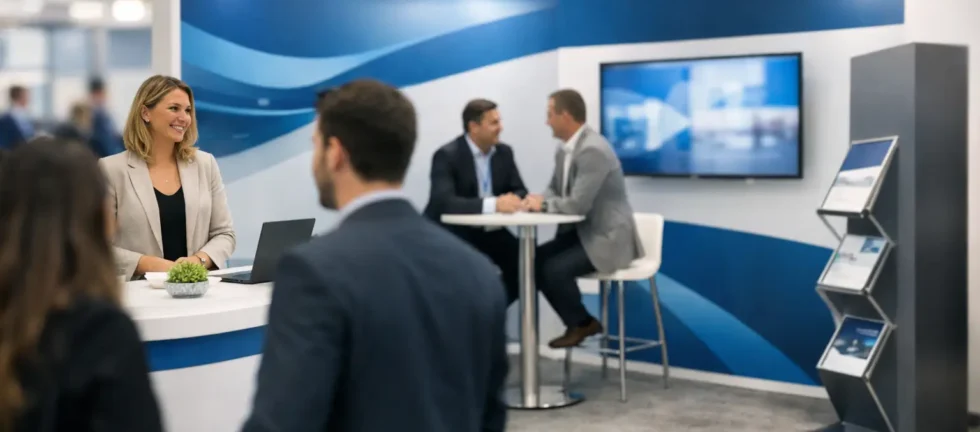
A corporate photo booth can either become the busiest corner of the room or an expensive piece of décor guests walk past. The difference is rarely the booth alone. A thoughtful corporate booth branding guide turns every print, backdrop, and shared photo into an extension of your event identity – while still giving guests an experience they genuinely want to use.
For corporate parties, galas, conferences, product launches, and client appreciation events, branding has to do more than place a logo in the corner. It needs to look intentional, photograph beautifully, and respect the tone of the occasion. When those details are handled well, guests leave with a keepsake they are proud to display rather than a promotional item they forget in a bag.
Start With the Guest Experience, Not the Logo
The most effective branded booth experiences begin with one question: what should guests feel when they step in front of the camera?
A high-energy sales kickoff may call for bold color, playful props, animated overlays, and a fast-moving print design. A formal gala may need a refined backdrop, restrained typography, flattering studio lighting, and an elegant photo strip that feels like a premium memento. A company holiday party can sit somewhere in between, balancing seasonal personality with recognizable brand details.
This is where many corporate activations lose their impact. A large logo and a busy graphic background may meet a branding requirement, but they can make photos feel overly promotional. Guests are more likely to pose, share, and keep images when the design makes them look good first. Your branding should frame the memory, not compete with it.
A premium booth setup supports that goal. Studio-grade lighting, a professional camera, and a carefully positioned backdrop produce polished images across different skin tones, outfits, and group sizes. Great branding cannot rescue dark, grainy, poorly composed photos. Quality has to come before the overlay.
Define What the Booth Needs to Accomplish
A booth can serve several purposes at one event, but one objective should lead the creative direction. For a recruitment event, the priority may be social sharing and an employer-brand moment. For a client gala, it may be hospitality and a luxury takeaway. For an internal celebration, the focus may be participation, team connection, and preserving the night.
Once the primary goal is clear, the right choices become easier. If sharing is the priority, ensure digital delivery is quick and the image format works well on mobile screens. If printed keepsakes matter most, invest in a template that feels substantial and leaves room for the guest photo. If the booth is part of a sponsor activation, agree in advance on logo hierarchy so the final design does not become crowded.
It also helps to define success before the event. That could mean a target number of sessions, guest participation by department, a gallery of usable branded content, or simply a line at the booth for most of the evening. The best measure depends on the event, but vague expectations often lead to vague results.
Build a Visual System for Your Branded Booth
Your booth should feel connected to the event without looking copied from a slide deck. Pull from the same visual system used on invitations, signage, presentation screens, and event collateral: approved colors, fonts, icon styles, and campaign language. Then adapt those elements for photography.
Use the Print Template as the Main Brand Touchpoint
Printed photos spend far more time in guests’ homes and offices than event signage does. That makes the template one of the highest-value places to invest in design.
Keep the logo visible but modest. A small logo, event name, date, and a short campaign phrase are often enough. Leave generous visual space around the photo, especially if guests will be posing in groups. Dense borders, tiny text, and multiple competing logos can make even a professionally photographed image feel like a coupon.
A standard 2-by-6-inch strip is familiar and fun, while a larger print can feel more elevated for gala and brand-forward events. Neither format is automatically better. It depends on whether guests need something quick and playful or something more substantial and display-worthy.
Choose a Backdrop That Photographs Well
A backdrop must work at camera distance, not just look attractive in a design mockup. Fine patterns can create visual noise. Highly reflective surfaces can produce distracting glare. Large text may be cropped out when people gather for group photos.
Step-and-repeat logo walls can be appropriate for media-facing events, sponsorship moments, and red-carpet arrivals. For a general corporate party, however, a more refined backdrop with subtle brand color or an event-specific theme often produces warmer, more natural photos. Guests tend to relax when they do not feel they are standing inside an advertisement.
If you are using a custom backdrop, test it against the planned lighting and print layout. The color behind guests changes the entire final image. A rich navy backdrop can look sophisticated, for example, but it needs enough separation from dark formalwear. A white backdrop can feel clean and modern, but it must be lit correctly to avoid looking flat or washed out.
Keep On-Screen Branding Purposeful
Digital screens, sharing galleries, and email or text delivery screens offer additional opportunities for brand presence. Use these touchpoints for a campaign tag, event language, or a clean logo treatment. The key is consistency. If the print feels elegant but the sharing screen uses unrelated colors or informal wording, the guest experience loses polish.
For events with a clear social campaign, a branded hashtag can be useful. It should be short, readable, and optional. Guests will not use a complicated tag just because it appears on a sign.
Make the Booth Feel Worth Using
Corporate guests are more selective than they are often given credit for. They can spot a low-effort activation immediately: dim lighting, a tablet camera, a flimsy backdrop, unclear instructions, or an unattended station. Those details affect participation because they affect trust.
A professionally operated booth changes the experience. Guests know where to stand, how to start, when the images are ready, and how to receive them. An on-site attendant also keeps the booth tidy, encourages participation without being intrusive, and resolves small issues before they become event-day frustrations.
This is particularly valuable when a booth is tied to a high-stakes event. At a gala, leadership reception, conference, or major holiday party, there is no room for a vendor who arrives late, needs constant direction, or introduces hidden costs after the planning is complete. Reliable setup, clear communication, and transparent package details are part of the brand experience your guests will remember.
Add Interactive Features Only When They Fit
AI photo experiences, audio guestbooks, themed props, and custom digital effects can make a booth more memorable. They are not mandatory for every corporate event.
AI images can be a strong fit for a futuristic product launch, a conference with an innovation theme, or a holiday party where guests want something unexpected. An audio guestbook can capture warm messages for an executive retirement, milestone anniversary, or company celebration. Thoughtfully selected props can bring energy to an internal party, while a formal awards dinner may benefit from fewer props and a more editorial look.
The trade-off is time and attention. Every added feature should be simple enough for guests to understand without slowing down the line. A focused, beautifully executed photo booth is more valuable than a long list of options that feels confusing or disconnected from the event.
Plan the Space Like an Event Feature
Placement has a direct effect on usage. Put the booth too close to the entrance and guests may rush by before they are ready to participate. Place it in a hidden hallway and many people will never see it. The strongest location is usually near the energy of the event, with enough room for a natural line and clear sightlines from the main gathering area.
Consider the background beyond the booth as well. If guests waiting in line are visible in every image, keep that area organized. If the booth is near a dance floor or stage, confirm that the sound and lighting will not interfere with operation. For corporate venues across Ontario, load-in access, elevator timing, power availability, and setup windows should also be confirmed early, especially for hotel ballrooms and conference spaces with tight schedules.
Give the booth time to become part of the room. Opening it during cocktails can create early momentum, while keeping it active after dinner often captures the most relaxed group photos. For a shorter activation, choose the period when guests are most likely to mingle rather than scheduling it during presentations or formal programming.
Review the Details Before You Approve
Before final production, ask to see the actual print template, backdrop design, and branded screen artwork at their intended dimensions. Check logo placement, spelling, dates, and the visibility of any sponsor marks. Confirm what is included: attendant service, setup and teardown, prints, digital sharing, online delivery, props, travel, and any custom design work.
This review is also the right time to discuss privacy and photo access. Corporate hosts may want a public gallery for guest enjoyment, a private gallery for internal use, or a clear plan for how branded images can be shared after the event. Setting expectations before the event protects both the guest experience and the brand.
Zattu Photo Booth approaches corporate branding as part of the full event experience, pairing custom creative with professional Nikon Z9 photography, three-point strobe lighting, attentive on-site operation, instant prints, and digital delivery. The result is not just a branded photo. It is a polished moment guests will want to revisit.
The right booth branding should make your company feel present without making the celebration feel commercial. When the photography is flattering, the design is intentional, and the service is dependable, every guest keeps a small, tangible reminder of an event your brand hosted with care.