

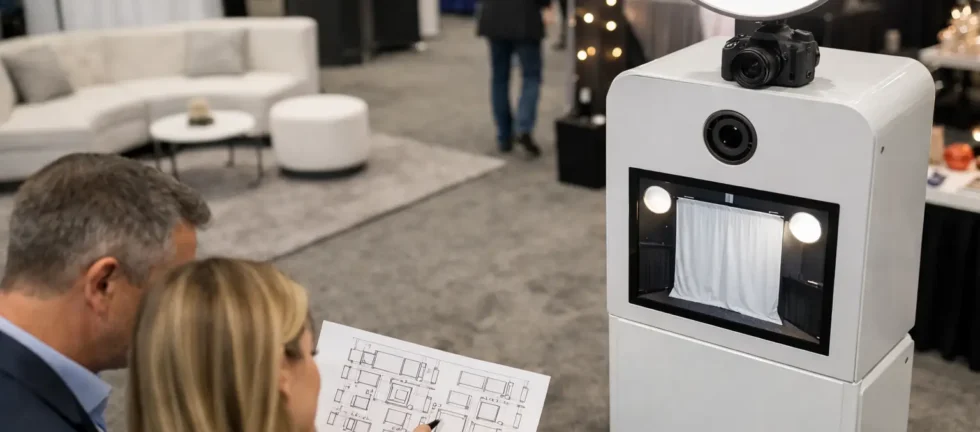
A photo booth can have exceptional equipment, a beautiful backdrop, and custom prints, yet still sit unused if it is placed in the wrong corner of the room. Knowing how to plan booth placement is less about finding an empty wall and more about creating a natural moment for guests to step in, have fun, and leave with a keepsake.
For weddings, galas, corporate events, and private celebrations, placement affects everything: image quality, guest traffic, noise levels, accessibility, and how polished the room feels. A well-positioned booth becomes part of the celebration. A poorly positioned one becomes an afterthought.
How to plan booth placement around guest flow
Start with the path your guests will take through the venue. Consider where they enter, where they collect drinks, where they eat, and where they gather once the formal program ends. The best booth location usually sits close to the action without being directly in the action.
For most receptions, a position near the bar, lounge area, or route between dinner and dancing works well. Guests naturally pass through these spaces several times throughout the evening. They see the booth, watch others enjoying it, and feel invited to participate without needing an announcement every half hour.
Avoid placing the booth immediately beside the entrance. That area often becomes congested during arrivals, gift drop-offs, coat checks, and late-night departures. It can also make the booth feel like a checkpoint rather than a fun experience.
A booth should also not block the route to restrooms, emergency exits, catering access, or service doors. Even if the spot looks open during a site visit, ask the venue team how the room operates during service. A clear floor plan on paper can change quickly once tables, trays, guests, and entertainment are in motion.
Give the booth enough room to work properly
Premium photo booth photography requires more than the footprint of the backdrop. Guests need space to enter, pose, browse props, collect prints, and move away without creating a crowd around the camera.
As a practical starting point, plan for an area of at least 8 by 8 feet, with additional room in front for a small line. Larger groups, elaborate backdrops, print stations, or audio guestbook add-ons may need more. The exact space depends on the booth setup and venue layout, so confirm dimensions with your photo booth provider before finalizing the floor plan.
Ceiling height matters as well. Professional lighting is designed to create flattering, consistent images, but low ceilings, exposed fixtures, or hanging décor can limit where equipment can safely be positioned. A vendor using studio-grade lighting should assess the area rather than simply squeezing into a gap between tables.
If your event includes a dance floor, keep a comfortable buffer between it and the booth. Too close, and guests may bump into equipment or create a bottleneck during peak dancing. Too far away, and the booth loses the energy that encourages participation. A nearby side wall or lounge-adjacent corner is often the sweet spot.
Plan for the line, not just the camera
A busy booth is a good sign, but a line crossing the dance floor or wrapping around dinner tables can disrupt the event. Choose a location where waiting guests can stand comfortably without blocking servers, speakers, or other guests.
For larger corporate functions and gala events, a wider queue area is particularly valuable. People often attend in groups, and colleagues may wait nearby to watch, share a laugh, or decide on their next pose. That social energy helps usage, provided it has room to happen.
Prioritize lighting, power, and photo quality
The venue may be beautiful, but not every visually appealing corner photographs well. Strong backlighting from windows, harsh ceiling spotlights, colored uplighting, and reflective mirrors can all affect the final image if the booth is not designed and positioned carefully.
A professional booth with a dedicated camera and strobe lighting can create consistent results in many environments, but the operator still needs a controlled setup area. The backdrop should be clear of visual distractions. The camera should not be aimed toward a bright window or a high-traffic hallway. Lighting stands and cables need a safe, intentional position.
Power is another detail that deserves attention early. Ask the venue whether a standard outlet is available near the booth location and whether it will remain accessible throughout the event. Extension cords across guest walkways are never ideal. When they are necessary, they should be properly secured and incorporated into the setup plan.
This is one reason an owner-operated service matters. The goal is not simply to switch on a booth. It is to assess the room, adjust for the available light, secure the equipment, and protect the guest experience from the small operational issues that can become event-day distractions.
Keep the booth visible without making it the centerpiece
Your booth should be easy to find. If guests have to ask where it is, it is probably too hidden. At the same time, it should support the visual rhythm of the room rather than compete with the head table, stage, ceremony décor, or keynote presentation.
For weddings, the booth often works best where it is visible from the reception space but not directly behind the couple during speeches. For corporate events, avoid placing it beside presentation screens or registration desks, where lines and flashes can distract from the program. For holiday parties and birthdays, a booth near the main social zone can encourage spontaneous use all night long.
Think about sightlines from seated tables. A clean backdrop can add to the atmosphere, especially when it is customized to the event palette or brand. But guests should not be staring into a queue every time they look toward the dance floor or stage.
Match placement to the event timeline
The ideal location may change based on when you want guests using the booth most. If the booth opens during cocktail hour, place it near the welcome-drink area or pre-dinner gathering space. If it is intended as late-night entertainment, position it closer to the dance floor and lounge activity.
For events with room flips or multiple spaces, discuss the timeline carefully. Moving a booth mid-event can be possible in some cases, but it adds complexity and is not always the best use of your rental time. A stable, well-chosen location is usually more reliable than a dramatic relocation.
Coordinate early with your venue and vendors
The most successful booth placements are decided before event day. Share your floor plan with the photo booth provider, venue coordinator, planner, DJ, and décor team. Each partner sees the room from a different operational angle.
Your DJ or band can flag speaker placement and sound-sensitive areas. Your planner can identify pinch points around the timeline. Your venue coordinator can confirm power, fire-code requirements, and catering routes. Your photo booth team can evaluate camera distance, lighting, backdrop clearance, and setup access.
Also ask about load-in. A booth may need to be brought through elevators, loading docks, narrow corridors, or busy kitchen-adjacent hallways. The best placement in the room is only useful if the team can arrive, set up, and test the experience before guests enter.
At Zattu Photo Booth, this planning is part of delivering a stress-free premium experience. Professional gear, custom visuals, and instant prints matter, but so does the thought put into where every element belongs.
Do not let décor create a practical problem
Balloon installations, floral arrangements, neon signs, lounge furniture, and custom walls can make a booth area feel special. They can also reduce usable space, block access, cast odd shadows, or make the setup difficult to service.
Keep décor outside the primary photo area unless it is intentionally part of the backdrop design. Leave clear access to the booth controls, printer, props, and attendant station. If you are using a floral or styled backdrop, make sure it is stable and designed to look good from the camera’s perspective, not only from across the room.
The same principle applies to props. A curated prop display encourages guests to participate, while a crowded table shoved into a corner can quickly become messy. Give guests a clear path: choose a prop, step into the frame, receive a print, and rejoin the party.
A thoughtfully placed booth does more than fill a blank area of the venue. It gives guests an easy reason to connect, laugh, and create photos they will actually want to keep. When you plan the location with traffic, lighting, space, and timing in mind, the booth becomes one of the most natural and memorable parts of the celebration.