

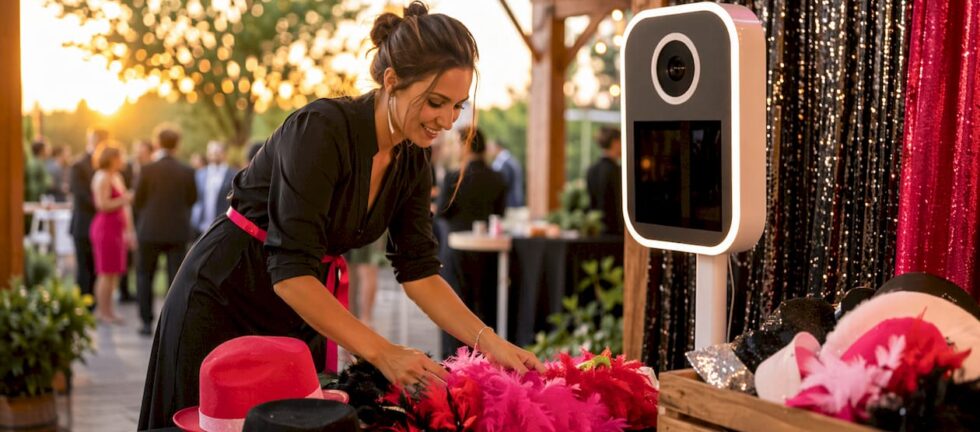
A marketing venue photo booth amenity is an interactive, branded experience that generates guest engagement and produces reusable marketing assets for venues and event planners. Unlike a standard entertainment add-on, a well-configured photo booth captures guest data, delivers branded digital content, and creates a recurring marketing channel for the venue. The industry recognises this setup under the broader term “experiential marketing activation,” and both terms apply throughout this guide. For event planners in Southwestern Ontario and beyond, understanding partnership models, vendor vetting, and setup logistics separates a forgettable booth rental from a genuine venue marketing asset.
What partnership models exist for venue photo booth amenities?
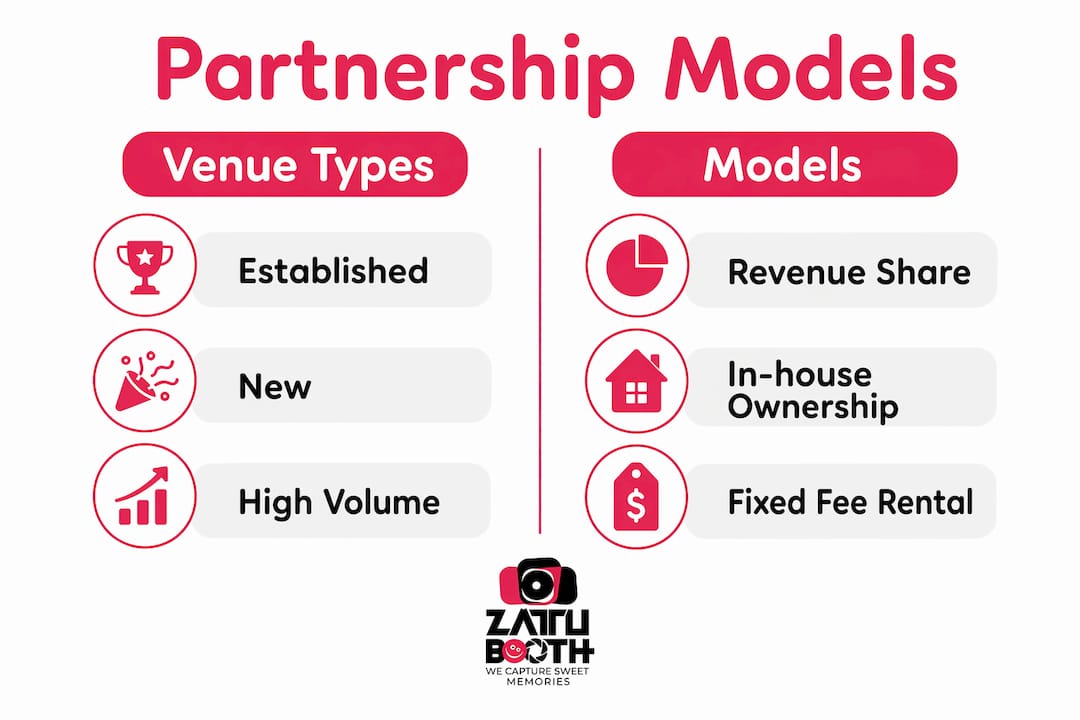
Venue-operator partnerships offer five common structures, each with distinct financial and operational implications. Choosing the wrong model costs venues either upfront capital or long-term revenue, so the decision deserves careful thought.
The five models are:
- In-house ownership. The venue purchases and operates its own booth. This requires a $3,000–$10,000+ investment but delivers 100% revenue retention. The venue controls branding, data, and scheduling entirely.
- Fixed-fee rental. The venue pays a flat rate per event to a vendor. Costs are predictable, and the venue carries no equipment risk. The vendor handles operations.
- Revenue-share. The operator installs the booth at no upfront cost to the venue. The operator keeps the majority of session earnings. This model suits venues that want zero financial exposure but accept reduced income.
- Hybrid rental-share. A reduced flat fee combines with a smaller revenue split. Both parties share risk and reward.
- Referral programme. The venue recommends a preferred vendor and earns a commission per booking. Operational responsibility stays entirely with the vendor.
The revenue-share model is the most common entry point for venues new to photo booth amenities. It removes financial risk but creates a critical blind spot: data ownership defaults to the operator unless the contract specifies otherwise. A venue that generates 3,500 guest emails per month from a single booth installation loses that entire marketing list if the contract is silent on data rights.
Pro Tip: Before signing any revenue-share agreement, add a clause requiring shared access to all guest email data collected through the booth. This single line transforms the booth from entertainment into a venue marketing tool.
The in-house ownership model suits established venues with consistent event volume. The fixed-fee rental model suits planners who book venues for one-off corporate or social events. Match the model to your event frequency and marketing goals before negotiating terms.
How do event planners vet photo booth vendors to meet venue standards?
Vetting photo booth vendors against venue standards is the step most planners underestimate. A vendor who cannot provide the right documentation or answer basic operational questions creates problems on event day, not before it.
Start with documentation. Venues commonly require proof of general liability insurance and a Certificate of Insurance listing the venue as an additional insured. Failure to provide this documentation is a leading cause of vendor rejection. Request the COI before any deposit changes hands.
Operational questions reveal vendor professionalism faster than portfolio reviews. Professional event planners value vendors who proactively discuss power access, load-in timing, and venue-specific restrictions. A vendor who asks about your venue’s electrical layout and load-in schedule before you do is a vendor who has run events before.
Key vetting questions to ask every vendor:
- What is your power requirement, and do you need a dedicated circuit?
- What are your setup and breakdown windows?
- Do you carry general liability insurance, and can you list our venue as additionally insured?
- What branded template options do you offer, and who owns the final digital assets?
- How do you handle lead capture, and in what format do you export guest data?
- Do you provide a professional attendant for the full event duration?
- What is your contingency plan if equipment fails on-site?
Marketing feature offerings matter as much as equipment quality. The best vendors deliver branded templates and CRM-ready lead capture with digital galleries available shortly after the event. For corporate events, this means your client’s marketing team receives usable assets before the week is out.
Pro Tip: Ask vendors to show you a sample data export file before booking. If they cannot produce a clean CSV or CRM-compatible file on request, their lead capture system is not ready for professional use.
Prioritising operational questions during vetting predicts smoother event flow and stronger venue relationships than focusing on price alone. A vendor who costs $200 more but arrives with insurance, a dedicated circuit plan, and branded templates is worth every dollar.
What are best practices for photo booth venue partnership setups?
A photo booth venue partnership setup succeeds or fails based on physical planning done weeks before the event. Logistics decided on the day of the event create disruptions that damage both guest experience and the venue relationship.
Placement and guest flow
Proper placement maximises guest interaction. Locations near dance floors increase energy and spontaneous participation. Lounge areas promote relaxed, social engagement. The booth must remain visible without obstructing guest flow or blocking safety exits. Poor placement reduces usage and limits the marketing content the booth generates.
Power and physical space requirements
| Requirement | Standard specification |
|---|---|
| Power circuit | Dedicated 110V/10A circuit |
| Footprint | Minimum 8 ft x 8 ft floor space |
| Vertical clearance | Minimum 8–10 ft ceiling height |
| Circuit separation | Separate from DJ, lighting, and catering equipment |
Photo booths require a dedicated 110V/10A circuit separate from lighting or DJ equipment. Overloading shared circuits is a leading cause of booth failures during events. Confirm circuit availability with the venue’s facilities manager at least two weeks before the event date.
Vertical clearance of at least 8–10 feet is required to accommodate equipment and professional lighting setups. Low ceilings prevent the use of full backdrop systems and studio-grade lighting, which directly reduces photo quality and the marketing value of the content produced.
Coordination with the event timeline
Confirm setup and breakdown windows with the venue coordinator in writing. Most professional vendors need 45–90 minutes for setup and 30–45 minutes for breakdown. Schedule these windows outside guest arrival and departure times. Confirm that the booth’s branded content and lead capture functions are tested before the first guest arrives.
ZATTU PHOTO BOOTH, for example, coordinates directly with venue staff on power access, placement, and timing before every event. Owner-operators handle setup personally, which eliminates the communication gaps that subcontracted crews create.
How can photo booth amenities be integrated into venue marketing packages?
Integrating a photo booth into venue marketing packages requires treating the booth as a content and data engine, not just an entertainment feature. The recurring asset of guest data and branded photo content often provides greater return on investment than direct session revenue alone.
-
Bundle with private event packages. Offer the booth as a premium add-on to corporate buyouts, wedding packages, and gala packages. This increases average booking value and gives clients a tangible differentiator when choosing your venue.
-
Use branded content for social media. Every photo taken at a branded booth is a piece of content your venue can repurpose. Guests who share their photos tag the venue organically. Negotiate with your vendor to include your venue’s logo or hashtag on every print and digital image.
-
Capture and own guest data. A venue installation generating thousands of prints monthly also generates thousands of guest email addresses. Unless shared data ownership is specified in the contract, operators typically retain the email list. Specify shared ownership explicitly.
-
Integrate lead capture with your CRM. The best vendors export guest data in formats compatible with platforms like Mailchimp, HubSpot, or Salesforce. A clean post-event email list from a corporate gala is a direct marketing asset for future venue bookings.
-
Deliver digital galleries promptly. Leading vendors deliver digital galleries by the following Monday morning, with expedited options available. Fast delivery keeps your event top of mind for guests and gives corporate clients content for their own post-event communications.
The digital sharing benefits of a well-configured booth extend well beyond the event itself. A single corporate gala can produce hundreds of branded images that circulate on LinkedIn, Instagram, and internal company channels for weeks.
Key takeaways
A photo booth venue amenity delivers its highest marketing value when data ownership, branded content rights, and operational logistics are confirmed in writing before the event.
| Point | Details |
|---|---|
| Choose the right partnership model | Match in-house, rental, or revenue-share to your event volume and marketing goals. |
| Secure data ownership in writing | Specify shared guest email access in every vendor contract to protect your marketing list. |
| Vet vendors on operations, not just price | Confirm insurance, power needs, and CRM export capability before signing. |
| Plan placement and power early | Reserve a dedicated 110V/10A circuit and confirm 8–10 ft clearance weeks before the event. |
| Bundle booths into venue packages | Offer photo booths as premium add-ons to increase booking value and generate branded content. |
What I’ve learned from running photo booths inside venues
The biggest mistake I see planners make is treating the photo booth conversation as an afterthought. They confirm the caterer, the DJ, and the florals, then call a booth vendor two weeks out. By that point, the venue’s dedicated circuits are already allocated, the best placement spots are blocked by other equipment, and there is no time to negotiate data rights into the contract.
The planners who get the most out of a photo booth amenity start the vendor conversation at the same time they confirm the venue. They ask about power before they ask about pricing. They request a sample data export before they review the photo gallery. They put data ownership language into the contract the same week they sign the venue agreement.
The other thing I would tell any planner is this: the branded content a booth produces is worth more than the entertainment value on the night. A corporate client whose 200 guests each share a branded photo generates organic reach that no paid ad can replicate at that cost. That reach starts with a contract clause and a well-placed booth, not a last-minute booking.
I have also seen planners lose entire guest email lists because the contract was silent on data rights. The operator walked away with 3,500 emails from a single event. The venue got a cheque and nothing else. That outcome is entirely avoidable with one paragraph in the agreement.
— George ZATTU
ZATTU PHOTO BOOTH for venue marketing partnerships
ZATTU PHOTO BOOTH works directly with event planners and venue coordinators across Southwestern Ontario to deliver photo booth experiences built for marketing, not just entertainment.
Every booking includes branded template design, professional attendants, and post-event digital gallery delivery. ZATTU PHOTO BOOTH uses Nikon full-frame mirrorless cameras and studio-grade lighting, which means every image your guests share reflects the quality of your event and your venue. We coordinate power, placement, and setup timing directly with venue staff so nothing falls through the cracks on event day. Whether you are planning a corporate gala, a wedding, or a private social event, our photo booth rental services are built to integrate into your venue’s marketing package from day one. Request a quote and let us show you what a properly configured booth can do for your next event.
FAQ
What is a photo booth venue referral programme?
A photo booth venue referral programme is an arrangement where a venue recommends a preferred vendor and earns a commission per booking. The vendor handles all operations, and the venue carries no equipment or staffing responsibility.
How do photo booth vendors coordinate with venues?
Professional vendors confirm power access, load-in timing, placement, and venue rules with the facilities manager before the event. This coordination typically happens two to four weeks in advance to avoid day-of conflicts.
What does a photo booth revenue-sharing model mean for venues?
In a revenue-share model, the operator installs the booth at no upfront cost to the venue and keeps the majority of session earnings. Venues benefit from zero financial exposure but must negotiate data ownership separately or risk losing guest email lists to the operator.
How do I vet a photo booth vendor against venue standards?
Request a Certificate of Insurance listing your venue as additionally insured, confirm the vendor’s power requirements and setup timeline, and ask for a sample CRM-compatible data export before signing any agreement.
What space does a photo booth need inside a venue?
A standard photo booth requires a minimum 8 ft x 8 ft floor footprint, 8–10 feet of vertical clearance, and a dedicated 110V/10A power circuit separate from DJ and lighting equipment.