

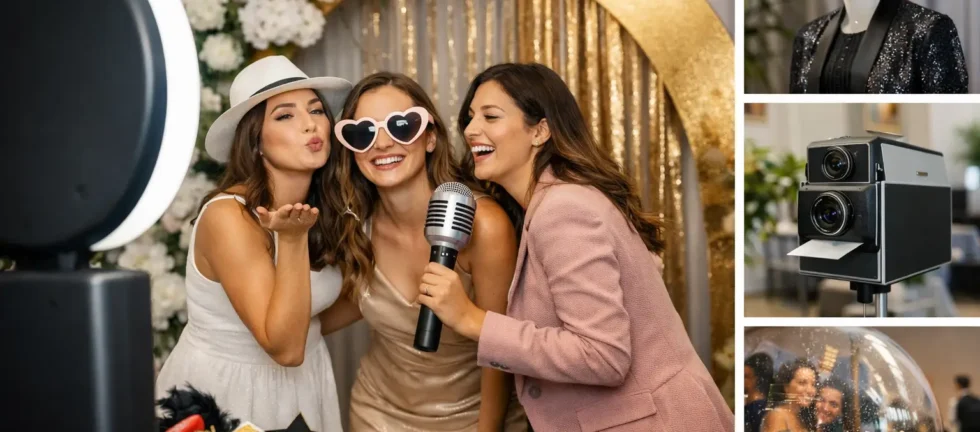
The fastest way to tell whether a photo activation is working is simple: are guests lining up because it looks genuinely fun, or are they stepping in once out of obligation and moving on? The best branded event photo activation examples do more than place a logo on a printout. They create a moment people want to participate in, share, and remember long after the event ends.
For corporate planners, gala organizers, and brand teams, that distinction matters. A photo booth can be a throwaway add-on, or it can become one of the most effective touchpoints in the room. The difference usually comes down to design, image quality, and how well the activation fits the event goal.
What makes branded event photo activations work
A strong branded photo activation has to do three jobs at once. It should attract attention from across the room, deliver flattering photos guests actually want to keep, and tie the brand in without making the experience feel like an ad.
That balance is where many activations fall short. If the branding is too heavy-handed, the photos feel promotional rather than personal. If the branding is too subtle, guests may enjoy the booth without connecting the experience to the host company, sponsor, or campaign. The best setups land in the middle. They make the guest feel like the star while keeping the brand visible in a polished, intentional way.
This is also where production quality matters more than people expect. A well-designed frame or custom backdrop cannot compensate for poor lighting, soft focus, or muddy prints. If the photo looks amateur, the brand does too.
9 branded event photo activation examples worth using
1. Step-and-repeat with studio lighting and instant prints
This is the classic option, but when it is done well, it still works. A branded step-and-repeat paired with professional lighting and a high-end camera creates photos that feel closer to red-carpet portraits than novelty snapshots.
This format is especially effective for galas, sponsorship events, award nights, and formal corporate functions. Guests understand it immediately, and sponsors appreciate consistent logo visibility in every image. The print itself becomes a takeaway that often ends up on desks, fridges, and bulletin boards.
The trade-off is that this format relies on execution. If the backdrop wrinkles, the lighting is flat, or the print design is cluttered, the activation can feel dated very quickly.
2. Custom print templates built around the campaign
Some of the strongest branded event photo activation examples are not flashy at first glance. They are simply well branded from edge to edge. A custom print template can incorporate campaign colors, event names, sponsor marks, or a product launch theme in a way that feels refined instead of crowded.
This works particularly well for conferences, employee appreciation events, and brand launches where consistency matters. Every printed strip or postcard-sized image becomes a small branded asset that guests take home.
The key is restraint. Too many logos or design elements make the final print look busy. A cleaner layout almost always feels more premium.
3. Immersive branded backdrop experiences
A backdrop does not have to be a banner. It can be a fully styled set that reflects the event theme or brand world. Think floral installations for luxury events, product-inspired environments for launches, or sleek seasonal builds for holiday parties.
This type of activation works because it gives guests context. They are not just standing in front of a wall with a logo. They are stepping into a scene. That extra visual interest tends to increase participation and produce more shareable images.
It does require more planning and a bigger footprint, so it is not ideal for every venue. But when the event has the space and budget, an immersive set can become one of the most photographed areas in the room.
4. Branded GIFs and digital sharing stations
If the goal is reach beyond the event itself, digital-first activations are worth considering. Animated GIFs, boomerangs, and share-ready photos with tasteful branding can extend the life of the event across social feeds, internal team channels, and post-event recaps.
This format is particularly useful for younger audiences, brand pop-ups, and tech-forward corporate events. Guests appreciate the speed, and organizers benefit from content that travels.
Still, digital should not mean low effort. The framing, lighting, and overlay design need the same level of attention as printed experiences. A digital file people actually want to post is more valuable than a dozen forgettable ones.
5. Product-centered photo moments
For product launches and experiential marketing events, the product itself can become the focal point of the photo activation. This could mean a beauty brand building a vanity-style station, a beverage company integrating its signature serve into the shot, or a retail brand styling the set around a new collection.
Done right, this approach makes the branding feel natural because it is built into the experience rather than pasted on afterward. Guests interact with the product, the product appears in the image, and the photo still feels personal.
The challenge is making sure the setup does not become too transactional. If guests feel like they are posing for an ad, participation drops. The experience should still be fun first.
6. AI-enhanced themed portraits
AI photo experiences can be surprisingly effective when they are used with intention. Guests can pose once and receive a stylized image that places them into a branded concept, campaign visual, or themed scene. For holiday parties, futuristic launches, and entertainment-heavy events, this can create real buzz.
This format works best when the transformation aligns with the event identity and the output still feels polished. If the effect is random or gimmicky, it gets one laugh and very little long-term value.
For brands that want something more memorable than a standard booth, this is one of the more modern branded event photo activation examples to consider. It adds novelty, but it still needs strong original capture quality to work well.
7. Audio guestbook plus photo pairing
Some events benefit from adding a voice component to the visual experience. Guests take a photo, then leave a short audio message connected to the event, couple, host, or company milestone. This works particularly well for weddings, anniversaries, retirement celebrations, and internal corporate events with an emotional angle.
From a branding perspective, this is softer than a logo-heavy activation, but that can be a strength. It creates a richer memory around the event and makes the experience feel more personal.
It is less about mass throughput and more about depth. If your priority is hundreds of fast interactions, another format may be a better fit.
8. Sponsor-branded multi-stop activations
At larger galas, conferences, or festivals, a single booth is not always enough. A smart option is to create a series of coordinated photo moments, each tied to a sponsor or event zone but unified by one overall visual standard.
This approach can spread guests throughout the venue and increase sponsor visibility without turning one area into a bottleneck. It also gives organizers more flexibility in storytelling. One station might feel polished and formal, another playful, another highly interactive.
Consistency matters here. Even if multiple sponsors are involved, the activations should still feel like part of the same event rather than unrelated pieces competing for attention.
9. Premium black-and-white portrait stations
Not every branded activation needs props, motion, or a highly themed set. For luxury events, leadership receptions, and elevated corporate evenings, a black-and-white portrait station can be the strongest choice in the room.
The branding appears in the print design, photo folder, or digital delivery rather than dominating the image itself. The result is timeless, flattering, and highly keepable. Guests are often more likely to save a polished portrait than a novelty shot.
This format is quieter than some others, but that is exactly why it works. It signals confidence. It says the event values quality over gimmicks.
Choosing the right branded event photo activation example
The right format depends on what success looks like for your event. If you need broad sponsor visibility, a step-and-repeat with custom prints may be the strongest fit. If you want social sharing, digital overlays and GIFs may carry more value. If your audience expects a premium experience, portrait-quality photography and refined branding usually outperform trend-driven effects.
Guest type matters too. Conference attendees often want speed and convenience. Wedding and gala guests may spend more time with an experience that feels personal. A holiday party crowd may respond well to themed or AI-enhanced elements, while an executive event often benefits from a cleaner, more polished setup.
That is why execution matters as much as concept. Even the smartest idea can underperform if the photos are poorly lit, the booth is unattended, or the final prints feel cheap. Premium events need activations that look as polished in person as they do in the final image.
For planners and hosts who care about presentation, this is where an owner-operated service with professional equipment stands apart. High-end cameras, proper strobes, careful template design, and dependable on-site support do not just improve the guest experience. They protect the way your event is remembered.
A branded photo activation should never feel like filler. When it is planned well, it becomes one of the few parts of the event guests physically take with them. That is a small detail with a long shelf life, and it is often where the best memories keep working for your brand after the night is over.