

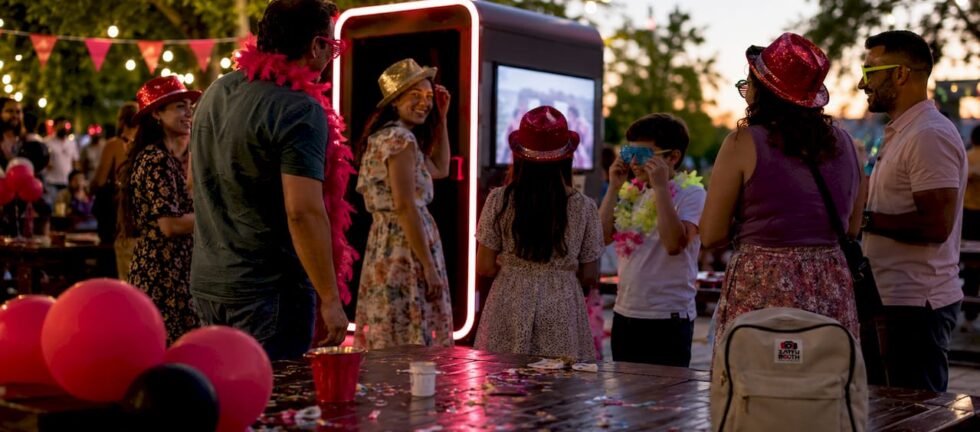
Photo booth game guest interaction is defined as the structured use of games, prompts, and digital mechanics within a photo booth to actively involve guests in an event. It goes well beyond simply snapping a photo. When guests compete in a posing challenge, choose an AI art style, or share a branded print for a prize, the booth becomes the social centre of the room. ZATTU PHOTO BOOTH builds this kind of participation into every rental, using Nikon full-frame mirrorless cameras, professional lighting, and AI-powered effects to give event hosts a proven tool for improving event engagement. The result is an event that guests actually talk about long after the last photo prints.
What types of photo booth games effectively engage guests?
Photo booth games fall into four broad categories, and each one serves a different crowd and event goal.
- Posing challenges. A prompt card or on-screen instruction tells guests to strike a specific pose, recreate a famous scene, or match a silhouette. These work at any event size and require zero technology beyond the booth itself. They are especially effective at corporate events and school fundraisers where guests may not know each other well.
- Digital effects and filter contests. Guests choose from a menu of digital overlays, colour filters, or themed frames and vote on the best result. This format suits galas, birthday parties, and weddings where aesthetic matters.
- AI transformation games. Guests select a creative prompt such as “turn me into a Renaissance portrait” or “show me as a superhero.” Guest personalisation increases sharing likelihood significantly because guests feel creative ownership over the result. AI booths from ZATTU PHOTO BOOTH can produce branded photos in under 3 minutes without requiring guests to create an account, which removes friction and keeps the line moving.
- Social media contests. Guests share their photo using a custom event hashtag for a chance to win a prize. A 60% sharing rate among 200 guests can generate over 20,000 organic impressions for a brand or cause. That kind of reach is difficult to buy with a standard advertising budget.
Pro Tip: Match the game format to your crowd. Posing challenges work for mixed-age groups. AI transformation games land best with guests aged 18–40 who are comfortable with technology.
What tools and technology do you need for interactive photo booth games?
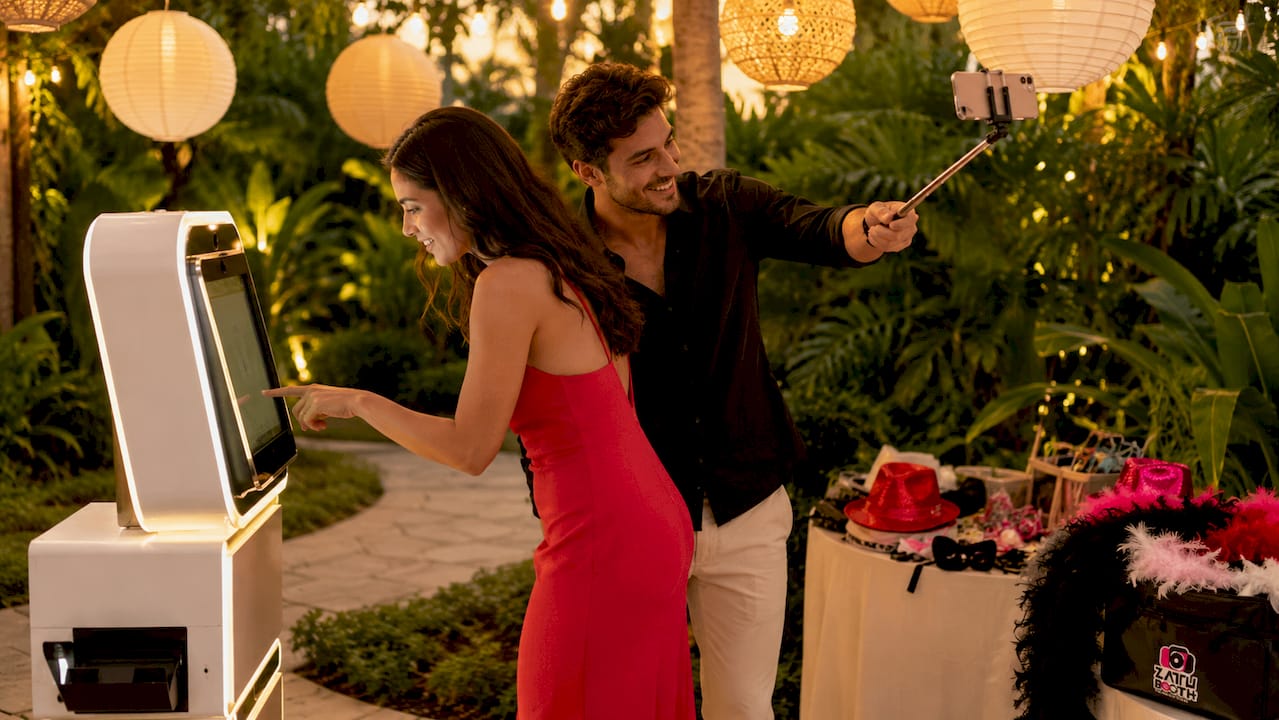
The right equipment determines whether your photo booth game runs smoothly or stalls the queue.
| Component | Purpose | Minimum standard |
|---|---|---|
| Camera | Image quality and speed | Full-frame mirrorless (e.g., Nikon Z-series) |
| Lighting | Consistent, flattering output | Studio-grade LED or strobe |
| Touchscreen interface | Guest input and game selection | 10-inch display or larger |
| Software platform | Game logic, overlays, sharing | Supports AI effects and email/SMS delivery |
| Printer | Physical keepsakes | Dye-sublimation, prints in under 30 seconds |
| Internet connection | Social sharing and AI processing | Stable 4G LTE or Wi-Fi |
Camera quality matters more than most event hosts realise. A full-frame sensor captures sharp detail even in low-light ballrooms, while tablet-based booths often produce soft, grainy prints that guests discard. ZATTU PHOTO BOOTH uses Nikon full-frame mirrorless cameras specifically because the image quality holds up on large prints and digital screens equally well.
Software is the second critical layer. The platform needs to support guest input fields, branded overlays, and direct social sharing without requiring guests to download an app. AI photo booth effects work best when the interface is simple enough for a guest to navigate in under 20 seconds. Anything more complex and you lose participation from older guests or those unfamiliar with touchscreens.
Pro Tip: Test your internet connection at the venue before the event. AI processing and social sharing both depend on a stable connection. A mobile hotspot as a backup saves the night.
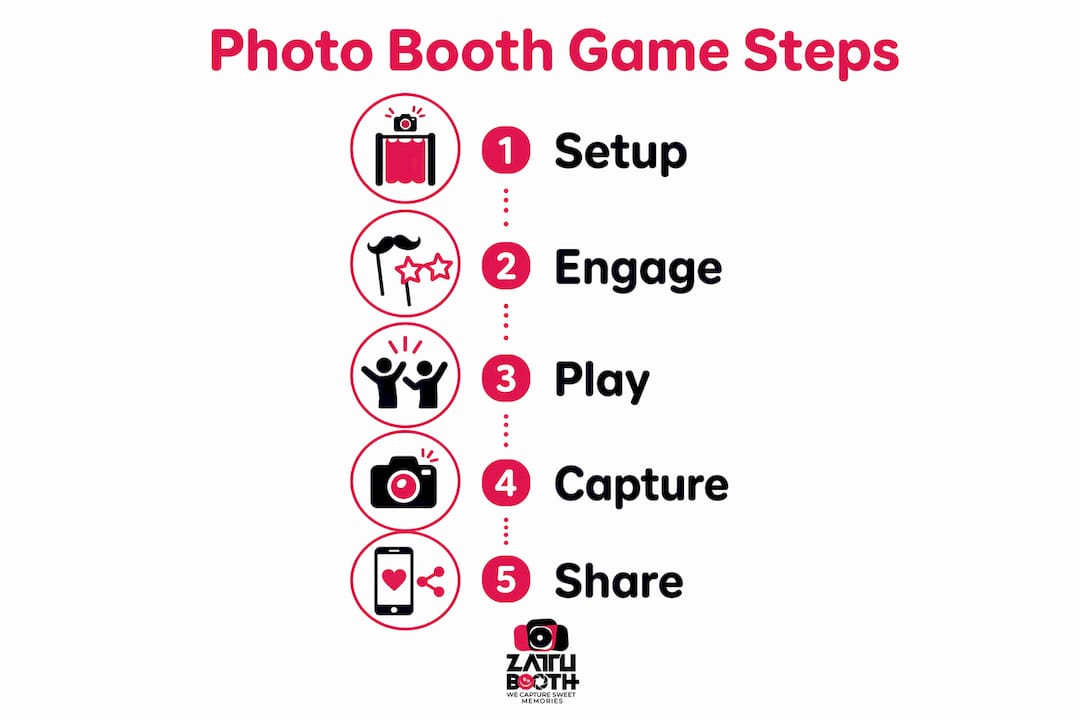
How do you configure and run photo booth games to maximise guest interaction?
Setting up a photo booth game for maximum participation takes more than plugging in the equipment. Follow these steps to get it right.
-
Define your game goal before the event. Are you collecting emails for a CRM, driving social sharing for a brand, or raising funds for a cause? Your goal determines which game format and which software settings you choose. A fundraiser benefits from a pay-per-print donation model, while a corporate event benefits from a branded overlay contest.
-
Position the booth in a high-traffic area. Photo booths act as social hubs that break down social barriers when placed near central gathering spaces like bars or registration desks. A booth tucked in a corner sees a fraction of the traffic of one placed at the room’s natural crossroads.
-
Set up clear, visible prompts. Print your game instructions on a sign next to the booth. Use large text and simple language. Guests should understand the game in five seconds without asking for help.
-
Programme your game modes before guests arrive. Load your branded overlays, AI effect options, and sharing settings during setup. Test every option yourself. A glitch discovered during the event kills momentum and frustrates guests.
-
Brief your attendant or configure self-serve guidance. A trained attendant dramatically increases participation by inviting guests to play and demonstrating the first step. For self-serve setups, use an animated on-screen tutorial that loops between sessions.
-
Use incentives to drive sharing. Announce a prize for the most-liked photo using the event hashtag. Display a live social feed on a nearby screen so guests can see their photos appear in real time. Visible results create a feedback loop that keeps guests returning to the booth.
-
Track participation throughout the event. Most modern software platforms log session counts, sharing rates, and email captures in real time. Check the dashboard at the halfway point and adjust your incentive messaging if participation is lower than expected.
How can photo booth games enhance event outcomes beyond entertainment?
Photo booth games deliver measurable value that extends well past the event itself.
- Brand amplification through printed keepsakes. Every print that leaves the venue carries your logo, event name, or sponsor branding. Branded keepsakes and data capture from photo booths provide significant long-term return on investment when integrated for lead generation and donor follow-up.
- Lead generation through email capture. Collecting guest emails or QR opt-ins at the booth transforms a brief entertainment moment into a qualified lead-generation tool for your CRM. A 200-guest event with a 50% opt-in rate produces 100 warm contacts in a single evening.
- Fundraising revenue through donation models. A pay-per-print model charging $5 per photo at a 300-guest event raises $1,500–$3,000 for a cause. Sponsor-funded and tip-jar models offer alternative structures depending on your fundraiser format.
- Organic social reach for brands and causes. Social sharing from a photo booth game creates impressions that paid advertising cannot replicate in authenticity. Guests share because they want to, not because they were targeted.
“Photo booths create a low-pressure environment that reduces social friction and encourages creative expression, which improves both employee and guest engagement at events.”
The strategic value of photo booth games is clearest when you plan for it from the start. Build your email capture form before the event. Choose a branded overlay that matches your sponsor’s guidelines. Set your donation price point in advance. Hosts who treat the booth as a passive entertainment feature leave most of this value on the table.
Key takeaways
Photo booth games are the most direct tool an event host has for turning passive attendees into active, sharing participants.
| Point | Details |
|---|---|
| Game format drives participation | Match the game type to your audience: posing challenges for mixed groups, AI effects for younger crowds. |
| Equipment quality determines output | Full-frame cameras and dye-sublimation printers produce keepsakes guests actually keep and share. |
| Placement is half the strategy | Position the booth near bars or registration desks to maximise foot traffic and spontaneous participation. |
| Games generate measurable ROI | Email capture, branded prints, and pay-per-print fundraising models all produce trackable value beyond entertainment. |
| Social sharing multiplies reach | A 60% sharing rate among 200 guests creates over 20,000 organic impressions for a brand or cause. |
What I have learned from watching guests play at the booth
After running photo booths at dozens of events across Kitchener, Waterloo, and Guelph, the pattern I see most often surprises first-time hosts. The guests who are most reluctant to approach the booth at the start of the night are usually the ones who come back three or four times once a friend drags them over. The booth does not need to attract everyone immediately. It needs one enthusiastic group to get started, and the crowd follows.
The biggest mistake I see hosts make is over-structuring the game. A list of ten rules posted beside the booth kills spontaneity. One clear prompt and a visible prize is all you need. The rest happens naturally.
I have also learned that booth placement is worth arguing about with your venue coordinator. The “out of the way” spot they suggest is almost always the wrong choice. Near the bar, near the food, or at the room entrance: those are the locations that produce full queues. A booth in a quiet corner produces polite curiosity and not much else.
My honest advice to any event host: book the AI photo booth option at least once. The reaction guests have when they see themselves transformed by an AI effect is unlike anything a standard filter produces. That reaction is what gets shared, and sharing is what makes your event memorable beyond the room.
— George ZATTU
ZATTU PHOTO BOOTH: photo booth games for your next event
ZATTU PHOTO BOOTH brings studio-grade photo booth game experiences to events across Kitchener, Waterloo, Guelph, and Hamilton. Every rental includes professional lighting, Nikon full-frame mirrorless cameras, and software configured for the game format that fits your event goals, whether that is an AI transformation contest, a branded overlay challenge, or a pay-per-print fundraiser model.
We offer party photo booth rentals with flat-rate pricing and no hidden fees, plus a personalized consultation to match the right booth type and game setup to your event. Our owner-operators handle setup, operation, and teardown so you can focus on your guests. Request a quote today and we will build a photo booth game plan that fits your event perfectly.
FAQ
What is photo booth game guest interaction?
Photo booth game guest interaction is the use of structured games, prompts, and digital mechanics within a photo booth to actively engage guests during an event. It turns a passive photo station into a social activity that drives participation and sharing.
What photo booth games work best for corporate events?
Posing challenges and branded overlay contests work well for corporate events because they encourage participation without requiring technical knowledge. AI transformation games are effective for younger corporate audiences and produce highly shareable results.
How does a photo booth help with fundraiser guest experience?
A pay-per-print donation model at a photo booth can raise $1,500–$3,000 at a 300-guest fundraiser charging $5 per print. Email capture at the booth also builds a donor list for follow-up after the event.
What is the best placement for a photo booth at an event?
Place the booth near high-traffic areas such as the bar, food station, or entrance. Research shows that central placement near gathering spaces breaks social barriers and increases spontaneous participation.
How many guests can a photo booth serve at one event?
Guest capacity depends on the booth type and session length. A well-configured booth with a trained attendant typically serves 80–120 guests per hour. ZATTU PHOTO BOOTH configures session timing and game flow to match your expected guest count during the pre-event consultation.